Key takeaways
9 min read
Key point 1
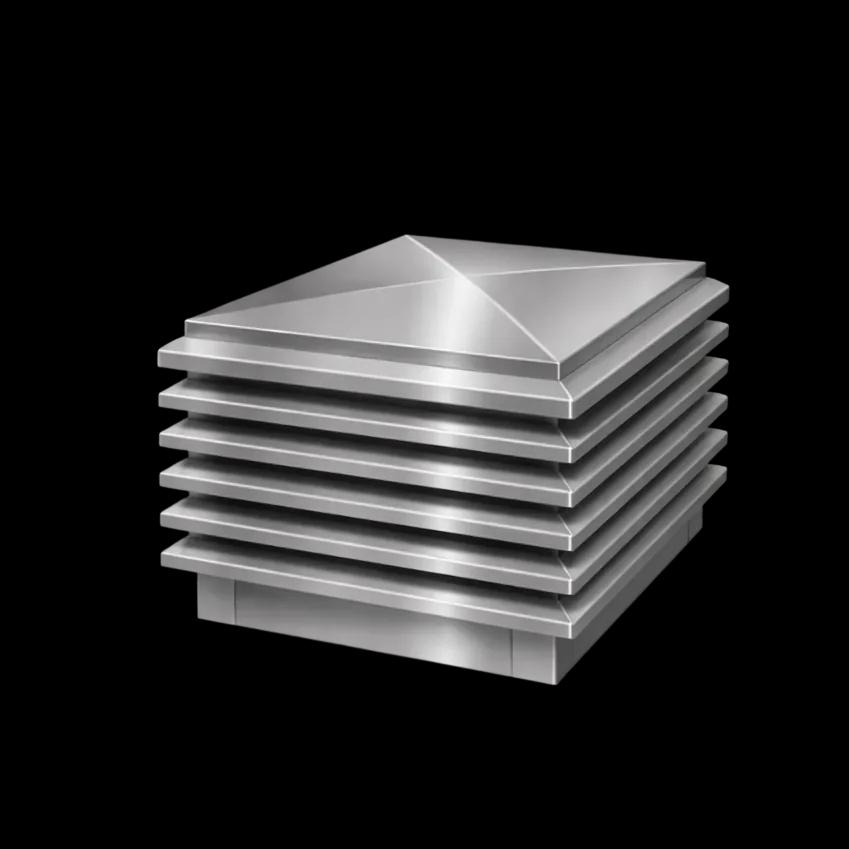
AISI 316 contains molybdenum and resists chloride corrosion especially well: it's the benchmark on the coast and in industrial settings.
Key point 2
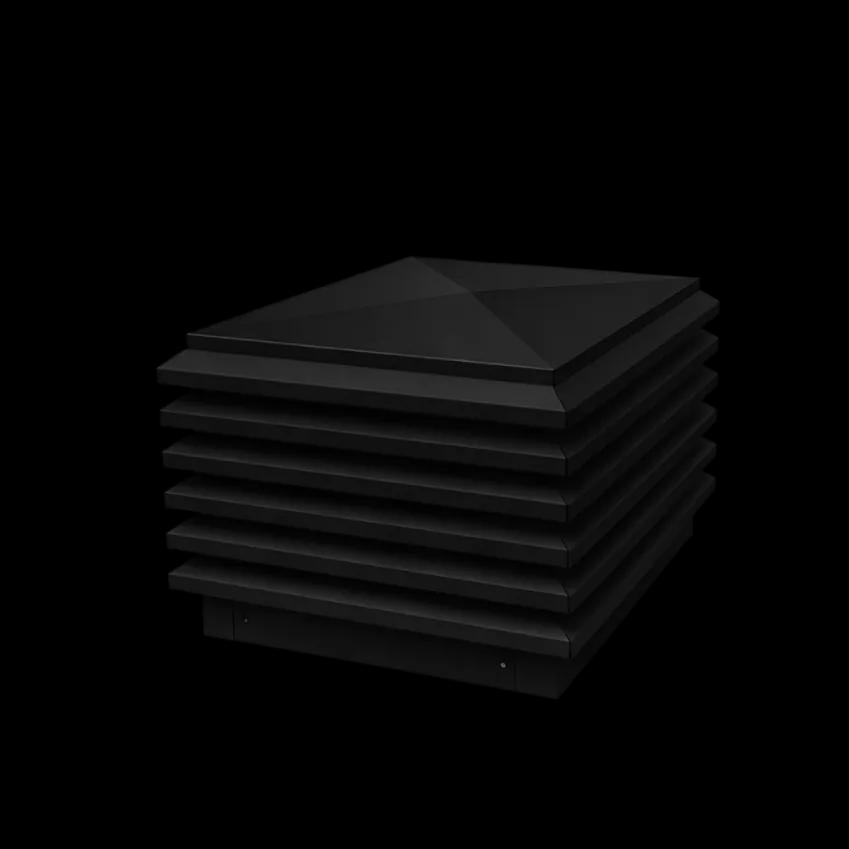
3005 H44 aluminum doesn't form red rust, weighs about a third of steel and can be lacquered in any RAL color.
Key point 3
Appearance is usually the tie-breaker: stainless brings a technical character, while aluminum lets the cap blend with the roof or the window frames.
Key point 4
Maintenance is minimal with either material, provided the cap is well made and well anchored.
Key point 5
Draft doesn't depend on the material but on the geometry of the cap and its fit to the flue outlet. VENTUM® caps are made to measure with a tolerance of 3 mm per side.
In this article
- Why the Cap's Material Matters More Than It Seems
- AISI 316 Stainless Steel: For the Most Demanding Environments
- Lacquered 3005 H44 Aluminum: Light Weight, Color and Integration
- Point-by-Point Comparison
- How the Fuel Influences the Choice
- The Factor That Really Decides It: Geometry and Sizing
- Common Mistakes When Choosing the Material
- Recommendation by Scenario
- Frequently asked questions
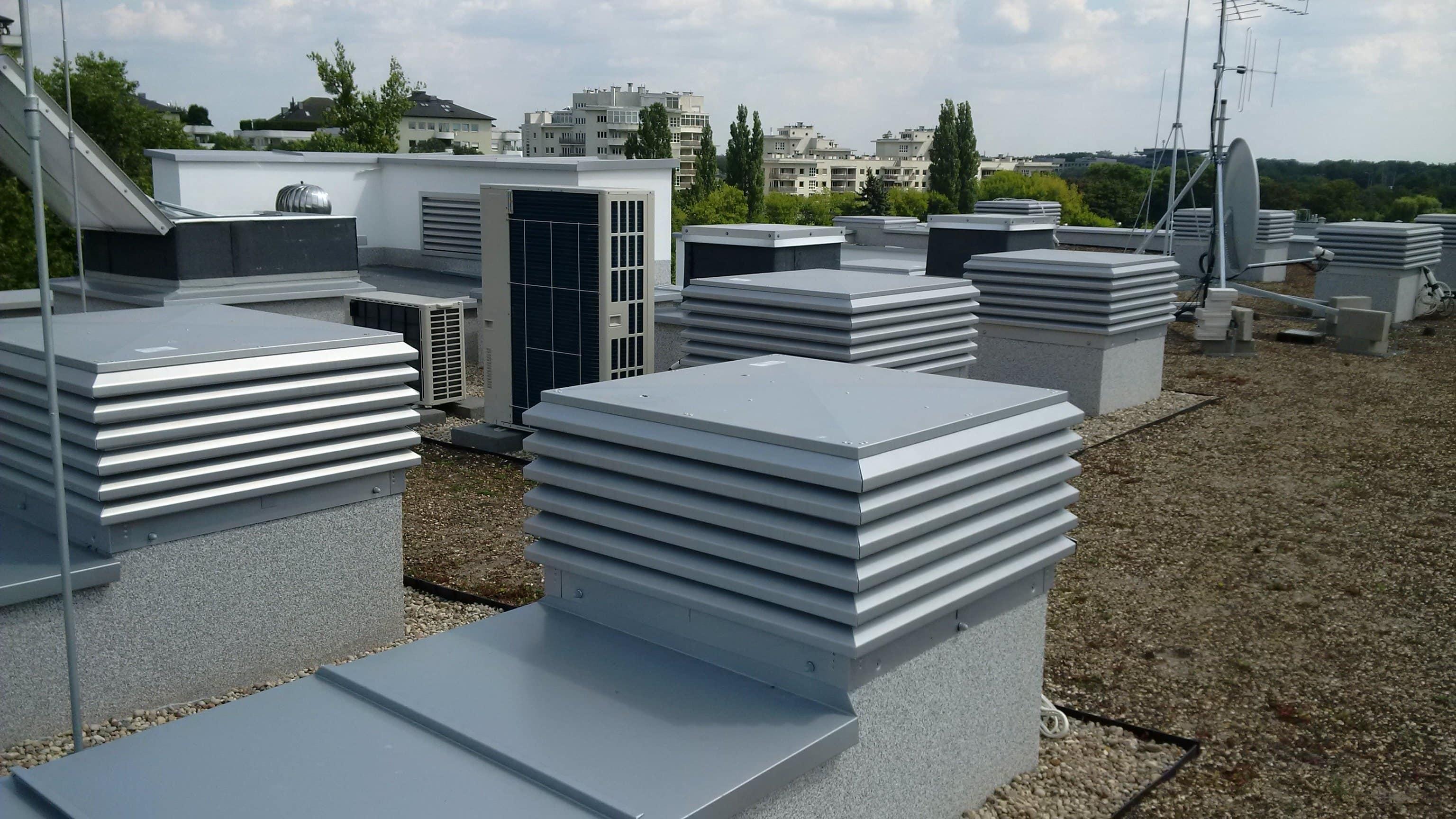
The cap is the piece that crowns the chimney, and the only one permanently exposed to rain, wind, frost and the flue gases themselves. Three very concrete things depend on its material: how many years it will last without degrading, how it will look from the street, and how much maintenance it will demand. The two materials that perform best in this application are AISI 316 stainless steel and lacquered 3005 H44 aluminum. Neither is better than the other in absolute terms: each one suits a different kind of location, installation and aesthetic requirement. This guide walks through the real differences between them and sets out clear criteria for deciding.
Section 02
Why the Cap's Material Matters More Than It Seems
A chimney cap works in conditions few roof components have to endure. On the outside it takes water, solar radiation, freeze-thaw cycles and, in coastal areas, salt spray. On the inside it is in contact with the products of combustion: water vapor, soot and, depending on the fuel, acidic condensates. Add to that the thermal expansion that comes from lighting and shutting down the flue and, on exposed roofs, the suction forces generated by wind.
In that context, an unsuitable material doesn't fail all at once: it degrades. Rust stains appear and run down the facade, the finish loses its color, joints open up and the anchoring works loose. Choosing the right material from the outset avoids roof-level callbacks, which are always expensive and disruptive, and protects the look of the building.
One point is worth clearing up straight away, because it causes a lot of confusion: neither stainless steel nor aluminum is 'the draft material'. Draft is a question of free cross-sectional area, of height above the ridge, and of how the piece is designed. The material determines durability and appearance; the geometry determines behavior.
Section 03
AISI 316 Stainless Steel: For the Most Demanding Environments
AISI 316 is an austenitic stainless steel that, on top of the usual chromium and nickel, contains molybdenum. That molybdenum is precisely what sets it apart from the far more common AISI 304: it markedly increases resistance to the pitting corrosion caused by chlorides. It's the reason it gets specified in marine environments, in industrial installations, and anywhere the atmosphere is chemically aggressive.
When stainless steel makes sense
- Seafront locations. Sea breeze deposits chlorides on the roof continuously; 316 is the material with the widest safety margin in those conditions.
- Industrial settings. Atmospheres carrying sulfur, process fumes or chemical dust.
- Aggressive fuels. Installations where the flue gases produce especially corrosive condensates.
- Projects with a technical language. Contemporary architectural roofs where the metal finish is part of the building's aesthetic argument.
What to bear in mind
Stainless steel weighs considerably more than aluminum, which affects handling on the roof and the anchoring design on large-format pieces. Its finish is the metal's own: you can work with polished or satin, but it isn't a material intended to reproduce a specific color. And although it's called 'stainless', it isn't immune: if it gets contaminated with carbon-steel particles during installation or transport, surface rust spots can appear and spoil the look of the piece.
Section 04
Lacquered 3005 H44 Aluminum: Light Weight, Color and Integration
The 3005 H44 alloy is a classic of aluminum construction: good formability, a clean surface finish and an excellent strength-to-weight ratio. Aluminum doesn't form red rust; it spontaneously generates a very thin, stable layer of aluminum oxide that protects the material. When it's also finished with polyester lacquer, that protection is reinforced and it opens the door to something stainless steel can't offer: color.
When lacquered aluminum makes sense
- When the cap should blend in rather than stand out. Lacquered in the same RAL as the window frames, the roof or the cladding, the piece stops reading as an add-on.
- On large-format pieces. Its light weight simplifies lifting, handling on the roof and the installer's work.
- In refurbishment. When the condition of the roof or of the chimney itself makes adding weight inadvisable.
- On developments with a unified specification. It lets every chimney across a residential scheme share exactly the same tone.
What to bear in mind
The durability of the finish depends directly on the quality of the lacquer and its surface preparation. A quality lacquer holds its color and gloss for years even under severe exposure; a poor one chalks and loses tone. That's why, with aluminum, the relevant question isn't only 'is it aluminum?' but what surface treatment it carries. In very severe marine environments it's worth specifying a lacquer suited to that exposure.
Section 05
Point-by-Point Comparison
These are the practical differences between the two materials, ordered by the weight they usually carry in the decision:
- Weight. Aluminum weighs roughly a third of stainless steel for the same volume. On large caps or roofs with difficult access, the difference shows during installation.
- Corrosion resistance. AISI 316 is the benchmark against chlorides thanks to its molybdenum. Aluminum doesn't rust in the red-rust sense that steel does and, correctly lacquered, performs very well in most locations.
- Behavior in marine environments. Excellent with 316 stainless; very good with aluminum lacquered to the appropriate specification. On the seafront with direct exposure, 316 has the wider margin.
- Color and appearance. Stainless steel offers a single register, the metallic one, with varying degrees of polish. Aluminum is lacquered in any RAL color, including matt and textured finishes.
- Maintenance. Minimal with both. A periodic visual check of anchors and joints plus an occasional clean to remove deposits is enough.
- Thermal behavior. Both materials handle the temperatures a cap reaches without difficulty, provided the installation respects the specified clearances and supports.
- Cost. AISI 316 stainless starts from a higher material cost. Lacquered aluminum tends to be more competitive, especially on large-surface pieces.
- Installation. Aluminum's lower mass reduces the demands on the anchoring and makes working at height easier.
- Sustainability. Both are recyclable metals at the end of their service life, an argument that increasingly features in the justification of project materials.
Section 06
How the Fuel Influences the Choice
The cap's material doesn't work in a vacuum: it lives with whatever comes out of the flue. Although the cap isn't subject to the same regime as the inside of the chimney, it does receive flue gases and condensates on its underside, and that detail is worth taking into account.
- Wood. Combustion with soot and creosote present. What matters here is that the cap allows access for periodic cleaning of the flue and doesn't accumulate deposits.
- Pellet and biomass. Lower flue-gas temperatures and a greater likelihood of condensation in the final section. A material that tolerates sustained moisture well is what you want.
- Gas. Clean flue gases but with a lot of water vapor. Condensation is the dominant factor, not chemical aggressiveness.
- Industrial or process installations. This is the scenario where AISI 316 is most clearly justified, given the nature of the effluents.
In a single-family home running on wood, pellet or gas and without severe marine exposure, both stainless steel and lacquered aluminum deliver an excellent result across the entire service life of the installation.
Section 07
The Factor That Really Decides It: Geometry and Sizing
It's common to focus the decision purely on the material and forget what actually governs how the cap performs. A cap does its job well when it protects the outlet from direct water ingress, prevents wind from generating back-pressure in the flue, and maintains enough free cross-sectional area for the gases to escape without being throttled. None of that depends on whether the piece is steel or aluminum: it depends on how the piece is designed and on its dimensions matching those of the actual chimney.
A standard cap fitted over a chimney that isn't a standard size leaves gaps for water to get in, forces improvised packing pieces, and ends up with poor anchoring. That's why VENTUM® caps are made to the exact size of each chimney, with a tolerance of 3 mm per side, in both stainless steel and lacquered aluminum. Correct sizing is what turns a good material into a good solution.
Before choosing a material, take the measurements properly. You need the external width and length of the chimney outlet and the available clear height. With those figures the piece is manufactured to fit, and the material becomes a decision about environment and appearance rather than a patch.
Section 08
Common Mistakes When Choosing the Material
- Assuming 'stainless' always means AISI 316. A good part of the market works with AISI 304, which performs worse against chlorides. It's worth specifying the exact grade.
- Choosing aluminum without asking about the lacquer. The finish is as decisive as the alloy. A lacquer unsuited to the expected exposure shortens the aesthetic life of the piece.
- Deciding the material before the size. If the piece doesn't fit, no material corrects the problem.
- Ignoring the roof as a whole. A bright metal cap over a weathered tile roof can look jarring; sometimes the best aesthetic decision is a lacquer in a discreet tone.
- Neglecting the anchoring. Most failures attributed to the material are in fact fixing failures under wind suction.
Section 09
Recommendation by Scenario
- Home on the seafront: AISI 316 stainless steel, for the additional margin against chlorides.
- Home in an urban or inland area: lacquered aluminum, for the performance-to-price ratio and the ability to integrate the color.
- Mountain areas with snow and frost: either one; prioritise the design of the piece, the drainage and the quality of the anchoring.
- Refurbishment of an existing building: lacquered aluminum, for its light weight and the ease of matching the color to the window frames.
- New-build contemporary architecture: stainless if a metallic language is the aim; lacquered aluminum if the cap should disappear visually.
- Industrial or process installation: AISI 316 stainless steel.
When in doubt, the practical criterion is simple: if the location is chemically aggressive, AISI 316 stainless; if what matters is weight, color or integration with the facade, lacquered aluminum.
FAQ
Frequently asked questions
Does aluminum hold up well on the coast?+
Yes, particularly with a lacquer suited to that exposure. Aluminum doesn't generate red rust and its natural protective layer behaves well in salt-laden air. That said, on the seafront with direct, continuous exposure, AISI 316 stainless steel offers an additional margin of safety.
Does the material affect the chimney's draft?+
Not significantly. Draft depends on the free cross-sectional area, on the height of the flue relative to the ridge, and on the geometry of the cap. The material determines durability and appearance, not how the smoke behaves.
Can I order the cap in a specific color?+
Yes. In lacquered aluminum you can choose any RAL color, including matt finishes. Stainless steel always keeps its own metallic finish.
What's the difference between AISI 304 and AISI 316?+
AISI 316 contains molybdenum, which markedly improves its resistance to chloride corrosion. In marine or industrial environments that difference is significant; indoors, far less so.
How long does a chimney cap last?+
With a material suited to the environment, correct manufacture and well-resolved anchoring, service life is measured in decades. What usually fails first isn't the material but the fixing or the fit of the piece to the flue outlet.
Are they made to measure?+
Yes. VENTUM® caps are manufactured to the exact size of each chimney, with a tolerance of 3 mm per side, in both stainless steel and lacquered aluminum.
Do they need maintenance?+
Very little. A periodic visual inspection of the anchors and joints, taken alongside the flue sweep, plus an occasional surface clean to remove deposits.
Related product
VENTUM®
Made-to-Measure Chimney Caps and Cowls
Made-to-measure chimney cap, static and mechanical
Share