Key takeaways
7 min read
Key point 1
The cap protects the flue outlet from rain, wind, birds and intrusions.
Key point 2
The pellet stove has forced draught; the wood stove depends on natural draught.
Key point 3
The cap must match the flue outlet diameter and have the right geometry.
Key point 4
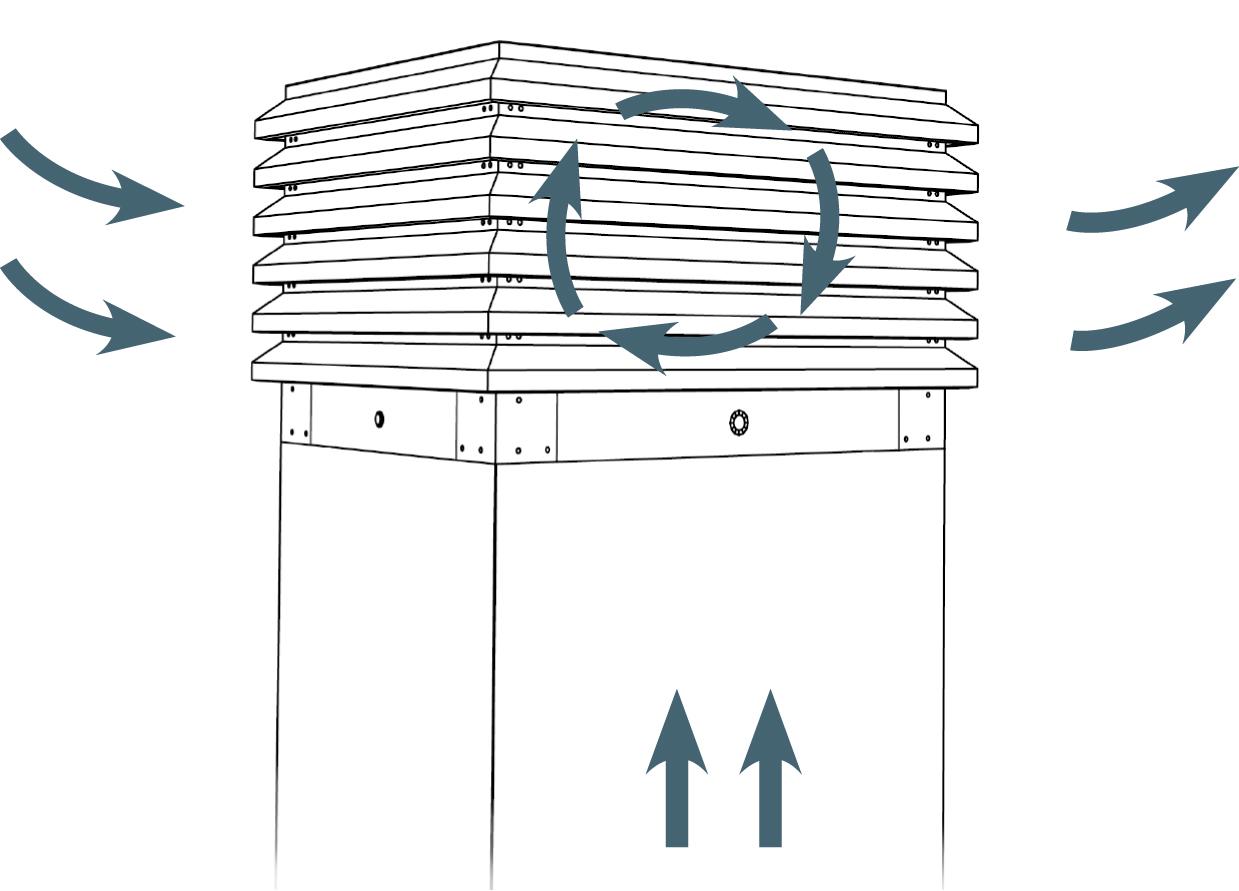
A good cap stabilises the draught and prevents downdraught when the wind blows.
Key point 5
The material (stainless steel or lacquered aluminum) is chosen according to the environment and the look.
Key point 6
Outlet height and the required distances are as important as the cap itself.
In this article
- Why the Flue Cap Matters So Much
- How Draught Works: Natural vs Forced
- Pellets and Wood Don't Ask for the Same Thing
- What a Good Cap Must Deal With
- Types of Cap for a Flue Outlet
- Cap Material: Stainless Steel or Lacquered Aluminum
- Flue Diameter: the Measurement That Decides Everything
- Outlet Height and the Regulations
- Condensation and Soot: Why They Matter
- Maintenance Before the Season
- Common Mistakes When Choosing the Cap
- Frequently asked questions
A pellet or wood stove only performs properly when the flue outlet is well capped: with good draught, no rain ingress and protected from the wind. The cap is the piece that crowns that outlet, and the appliance's efficiency, safety and freedom from damp depend largely on it. In this guide we go through how to choose it in depth: how pellet and wood draught differ, what types of cap exist, which material suits, how the flue is measured and what to bear in mind about outlet height, condensation and maintenance before the cold season starts.
Section 02
Why the Flue Cap Matters So Much
When we light a stove, the smoke must leave for the outside continuously and steadily. That upward movement is the draught, and clean combustion and sensible fuel consumption depend on it. If the draught weakens, the stove performs less well, dirties the glass, produces more residue and, in the worst case, sends smoke back into the room.
The cap is the piece that crowns the flue outlet. Although it looks like a simple accessory, it does several jobs at once: it protects the mouth of the flue, stops water getting in and birds nesting and, with the right geometry, helps keep the draught stable even in wind. A badly chosen cap — too closed, wrongly sized or unprotected — can choke the outlet and cause exactly the opposite of what we're after.
Section 03
How Draught Works: Natural vs Forced
Natural draught is produced by the difference in temperature and density between the hot smoke inside the flue and the cold air outside: the lighter smoke rises on its own. The taller and hotter the flue, the better it draws. It's the mechanism of wood stoves.
Forced draught, on the other hand, doesn't depend on physics alone: a fan built into the appliance pushes the smoke outwards. It's the case with most pellet stoves, which for that reason are less sensitive to wind and to outlet height, although they still need a well-capped, protected outlet.
Understanding this difference is the key to choosing well: with wood, the cap must help natural draught from being lost; with pellets, the priority shifts towards protection from rain, wind and birds.
Section 04
Pellets and Wood Don't Ask for the Same Thing
Although the principle is common, each appliance has different priorities. A pellet stove, with draught forced by its fan:
- Is less sensitive to wind, because it doesn't depend on natural draught.
- Its smoke leaves cooler, which increases the risk of condensation in the final section.
- The flue is usually smaller in diameter, typically around 80 mm.
- The priority for the cap is protection, above all from rain and birds.
A wood stove, which depends on natural draught:
- Is more sensitive to wind and outlet height, which directly affect the draught.
- Its smoke leaves hotter, with less condensation but more soot.
- The main risk is soot and creosote, which build up and are flammable.
- The flue is larger in diameter and the priority for the cap is to stabilise the draught as well as protect the mouth.
That doesn't mean one type is better than the other: simply, each has different needs that the cap must meet.
Section 05
What a Good Cap Must Deal With
- Rain: stop water entering the flue and running down towards the appliance, where it can corrode components and upset combustion.
- Wind and downdraught: stop gusts getting into the flue and reversing the draught, sending smoke back inside.
- Birds and intrusions: protect the mouth with a mesh or grille so that nests, leaves and dirt don't block it.
- Draught: help the smoke out with a geometry that, far from choking the section, maintains or assists it.
- Condensation and soot: avoid creating areas where water or residue collects and ends up dripping or blocking the outlet.
A cap that performs these five functions at once is the one that really makes a difference in the appliance's day-to-day running.
Section 06
Types of Cap for a Flue Outlet
Not all caps are the same. Depending on wind exposure and draught needs, one or another suits:
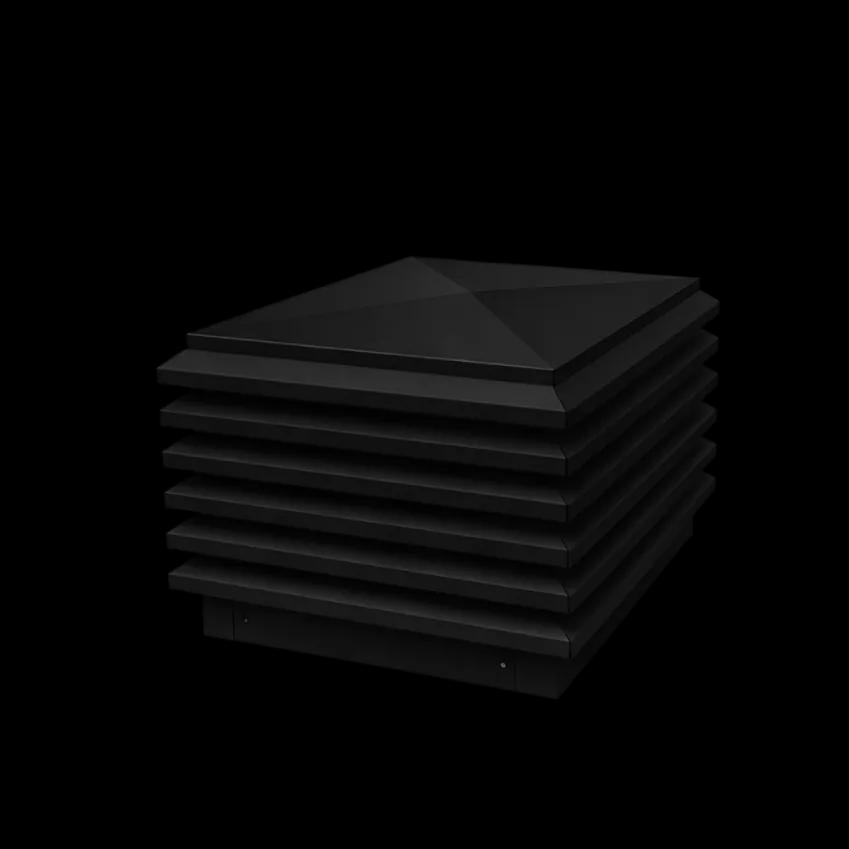
- Static chimney cap: covers and protects the mouth; with the right geometry it uses the wind to stabilise the draught, with no motor. Valid for most installations.
- Anti-downdraught cap: incorporates deflectors that break up gusts and reduce draught reversal. Suited to very exposed locations or the lee side of obstacles.
- Rotating static extractor: turns with the wind and creates suction that reinforces extraction, with no electricity. Useful with wood where the draught is marginal and there's no electrical supply.
- Mechanical cap: a motor actively forces the smoke out. For when natural draught isn't enough or the route is difficult.
On pellet stoves, with their own fan, a static chimney cap that prioritises protection is usually enough. On wood stoves in windy areas, an anti-downdraught model or a static extractor gives extra stability.
Section 07
Cap Material: Stainless Steel or Lacquered Aluminum
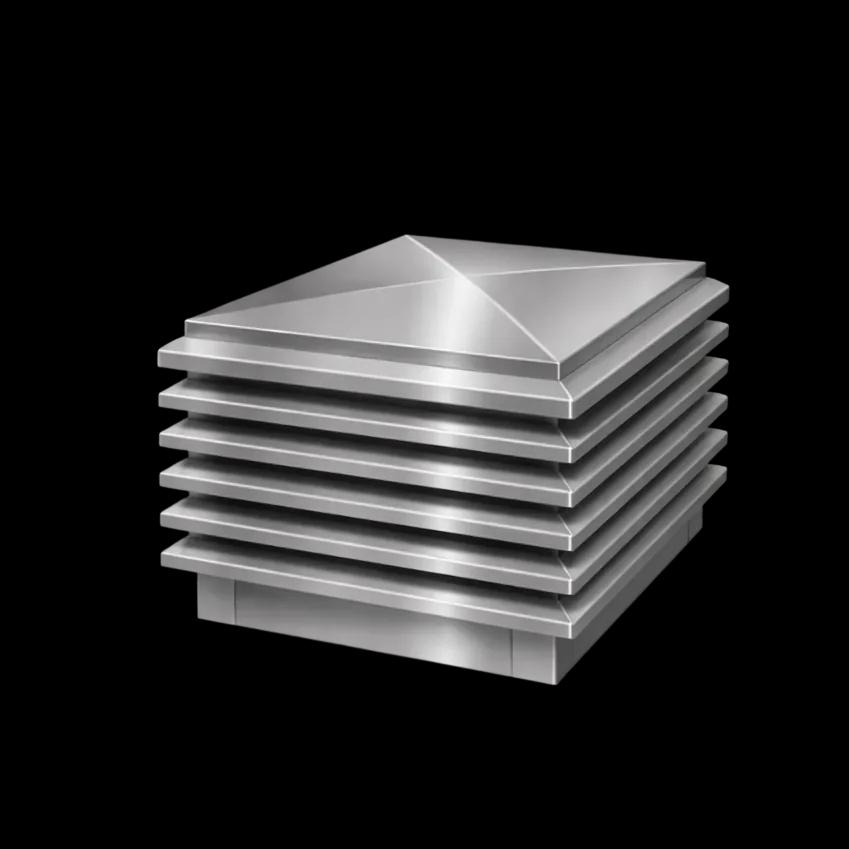
The two materials that perform best outdoors are stainless steel and lacquered aluminum. Stainless steel resists smoke and aggressive or marine environments particularly well, although it is heavier and keeps a metallic finish. Lacquered aluminum is lighter, lets you choose any RAL colour to blend with the roof or facade, and performs very well even near the sea. Both need minimal maintenance.
The piece can be made to measure in either material so that it fits the flue precisely.
Section 08
Flue Diameter: the Measurement That Decides Everything
The starting point for ordering a cap is the diameter of the stove's flue outlet. The piece fitting and the passage section being maintained both depend on it. Pellet stoves usually use smaller diameters (typically around 80 mm), while wood stoves use larger ones because of their greater smoke flow.
At Industrias Mas we make the made-to-measure chimney cap from that diameter, with a manufacturing allowance of 3 mm per side, so the piece seats well and stays watertight without choking the outlet. A cap that's too tight or too closed reduces the useful section and penalises the draught; one that's properly sized respects it.
Section 09
Outlet Height and the Regulations
The best cap in the world doesn't make up for a badly positioned outlet. For the draught to be stable and the smoke not to cause a nuisance, the outlet must clear the roof and keep suitable distances from the ridge, from windows and from nearby buildings. An outlet that is too low or too close to a roof slope is exposed to turbulence and to wind-driven downdraught.
The installation of biomass stoves and the discharge of their flue gases is governed by the building regulations in force for your country and by local rules, which set minimum heights and distances. It's worth checking them and, where in doubt, leaving the sizing and location to a qualified installer.
Section 10
Condensation and Soot: Why They Matter
On pellet stoves the smoke leaves cooler, so condensation is more likely to appear in the final section of the flue. The cap must not create areas where that water collects and drips.
On wood stoves the risk is soot and creosote: residues that build up in the flue and on the cap mesh and that, besides reducing the draught, are flammable. That's why the cap's bird protection must be easy to clean and not clog.
Section 11
Maintenance Before the Season
- Check and clean the cap and the flue before lighting up for the first time each season.
- Check that the bird mesh isn't obstructed by soot, leaves or nests.
- On wood stoves, watch for creosote build-up in the upper section of the flue.
- Check the fixing and watertightness of the cap after strong winds or storms.
Section 12
Common Mistakes When Choosing the Cap
- Choosing on looks alone: a pretty but badly sized cap penalises the draught.
- A model that's too closed: it chokes the outlet and smothers combustion.
- Forgetting bird protection: an open mouth ends up with nests and blockages.
- Ignoring the prevailing wind and the height: they are the main cause of downdraught.
- Badly sealed adaptors: joining different diameters without a seal causes leaks and condensation.
FAQ
Frequently asked questions
Is the same cap fine for pellets and for wood?+
The principle is the same, but a wood stove, depending on natural draught, benefits more from a cap that stabilises the draught against wind, while with pellets protection from rain and birds counts for more.
How do I know what size I need?+
You start from the diameter of the stove's flue outlet. With that figure we make the cap to measure so that it fits without choking the outlet.
Does the cap stop rain getting into the stove?+
Yes, it's one of its main functions: covering the mouth so water doesn't run down the flue towards the appliance.
Which material is better for smoke?+
Stainless steel resists smoke and aggressive environments particularly well; lacquered aluminum offers lightness and the choice of colour.
Does a cap improve the draught of a wood stove?+
A cap with the right geometry helps stabilise the draught by using the wind. If natural draught proves insufficient, a static extractor or a mechanical model reinforces the extraction.
Do I need bird protection?+
Highly recommended. An unprotected mouth can end up with nests and blockages that reduce the draught and are a hazard, especially with wood because of creosote.
Can I fit the cap myself?+
For simple cases it's possible, but outlet height and the required distances are important; if in any doubt, use a qualified installer.
Related product
VENTUM®
Made-to-Measure Chimney Caps and Cowls
Made-to-measure chimney cap, static and mechanical
Share