Key takeaways
7 min read
Key point 1
What they are: ALU-DROP® are the end caps that close off the ends of the window sill profile.
Key point 2
What they aren't: they're not the window sill itself, but the piece that trims its sides.
Key point 3
What they're for: they stop water leaking through the jambs and staining or degrading the wall.
Key point 4
Material: high-strength polymer, over a lacquered aluminum window sill profile.
Key point 5
Removable: fitted and removed without tools, which makes cleaning and maintenance easier.
Key point 6
Where it's decided: in the construction detail of the opening, not in the final on-site trim.
In this article
- What ALU-DROP® Actually Is
- Window Sill and End Cap: Two Different Pieces
- Why the Ends of the Window Sill Are the Critical Point
- How the End Cap Solves the Problem
- Material and Finishes
- How to Fit ALU-DROP®, Step by Step
- Five Common On-Site Mistakes
- How to Specify It in the Project
- Maintenance and Service Life
- Frequently asked questions
The window sill does its job well in the middle of the opening: it collects rainwater and throws it clear of the window. The problem shows up at its two ends. If the profile finishes open, water finds a sideways route into the jamb, the sub-frame and the inside of the wall. That's where ALU-DROP® end caps come in: they close off those ends, channel the run-off outwards and finish the edge cleanly. In this article we explain exactly what they are, why that area fails so often, how they're fitted and which on-site mistakes are worth avoiding.
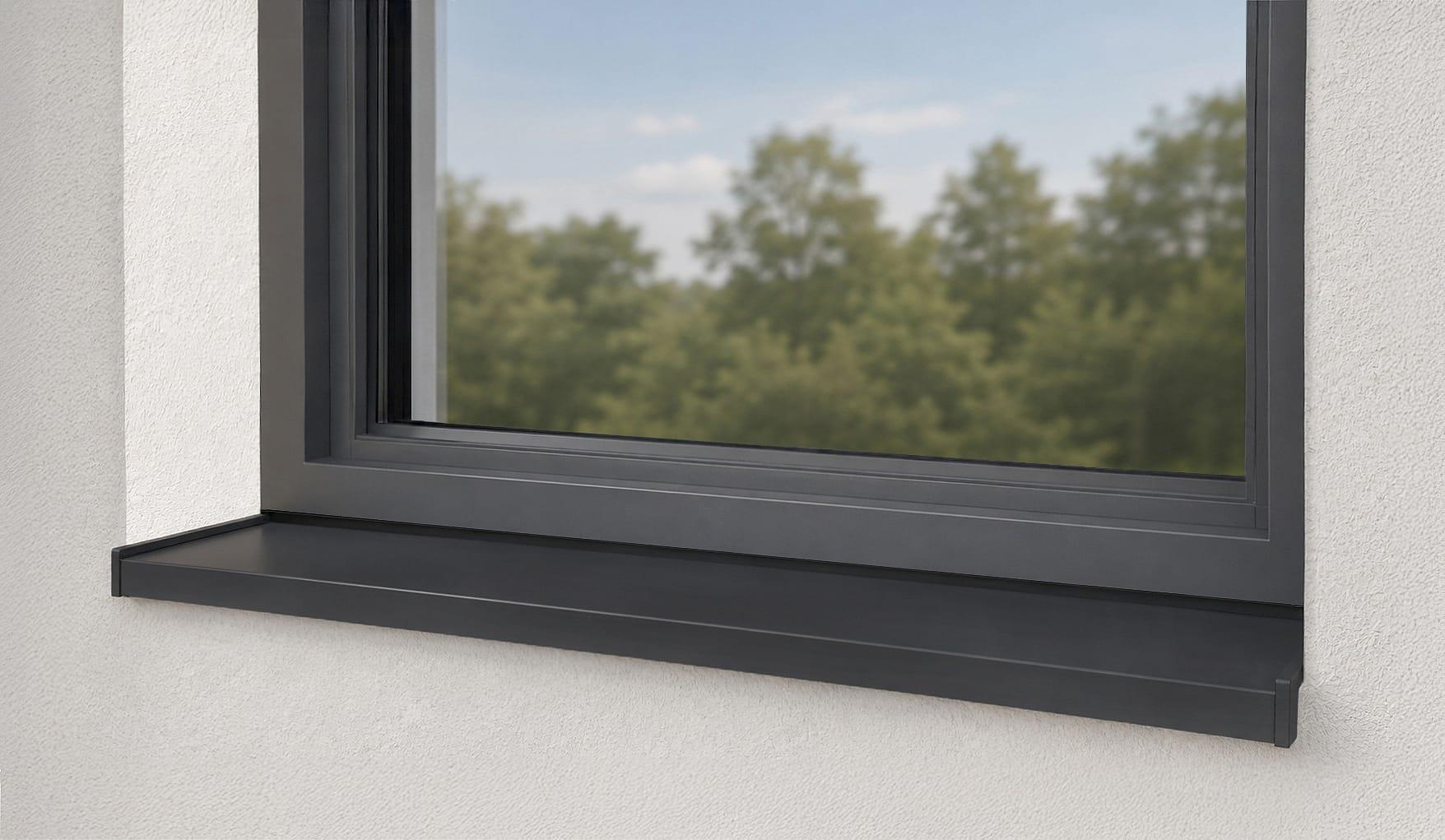
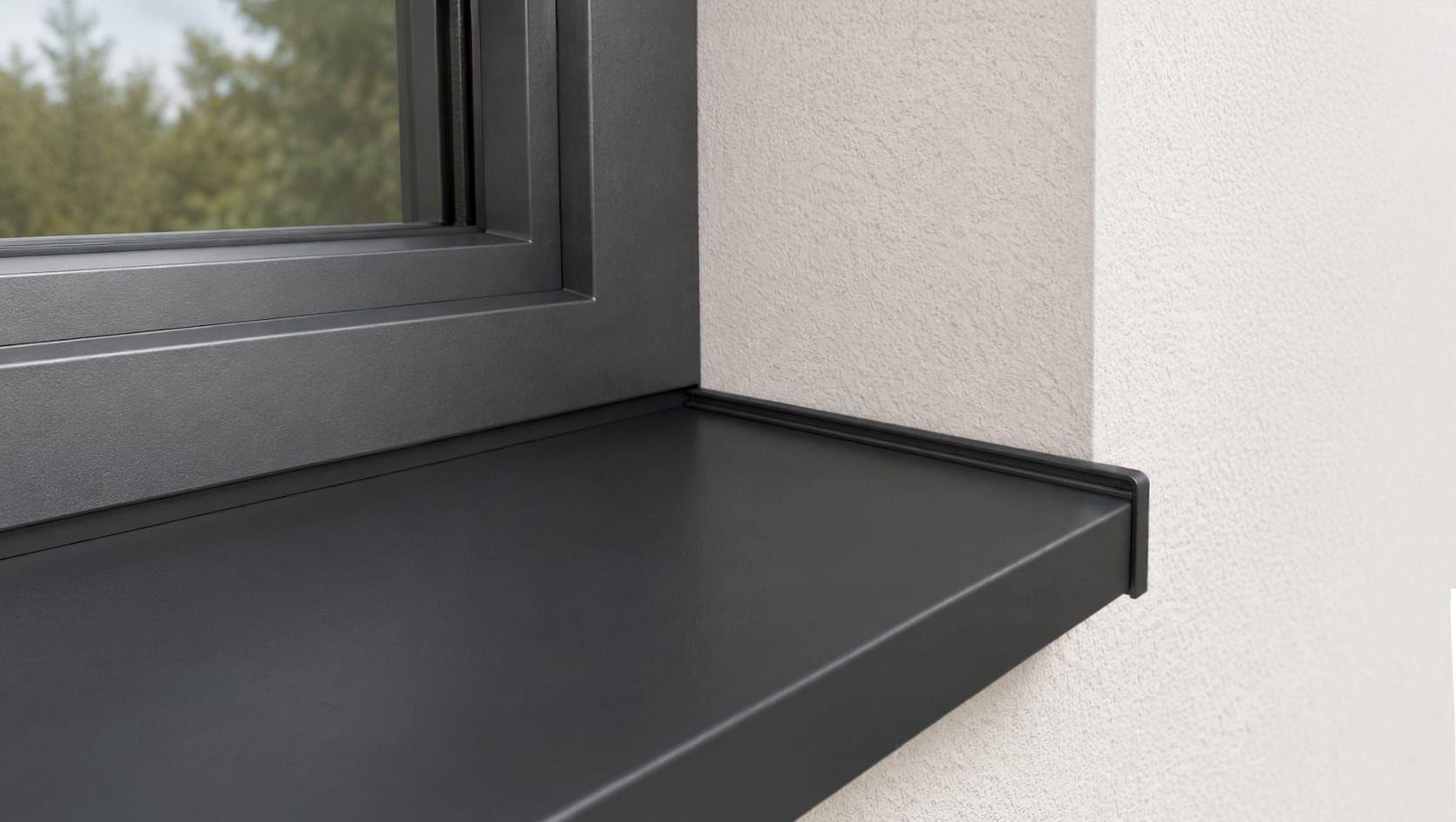
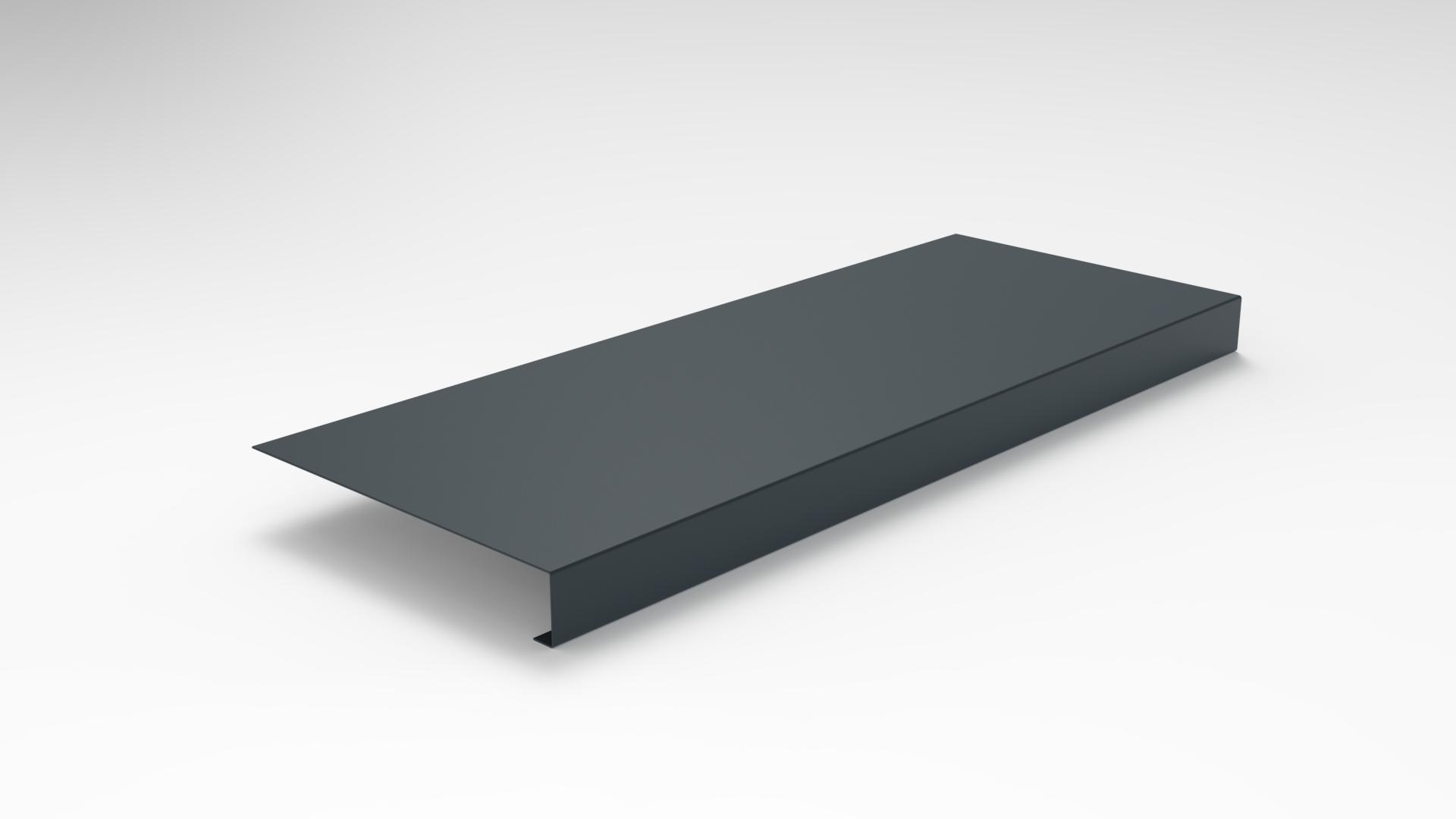
ALU-DROP® end cap. The piece that makes the difference, stopping water getting in at the sides and leaving the window sill completely finished.
Section 02
What ALU-DROP® Actually Is
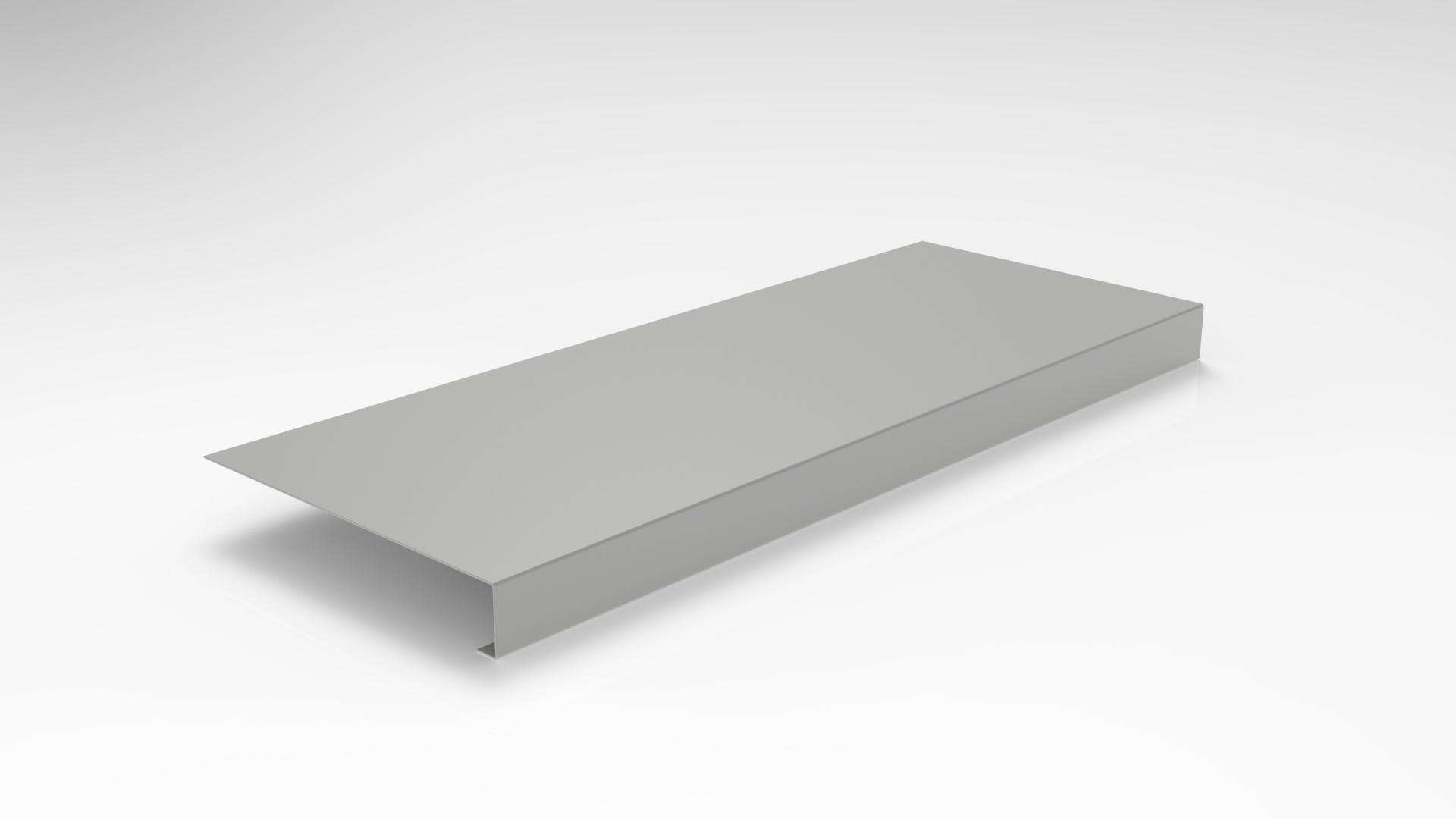
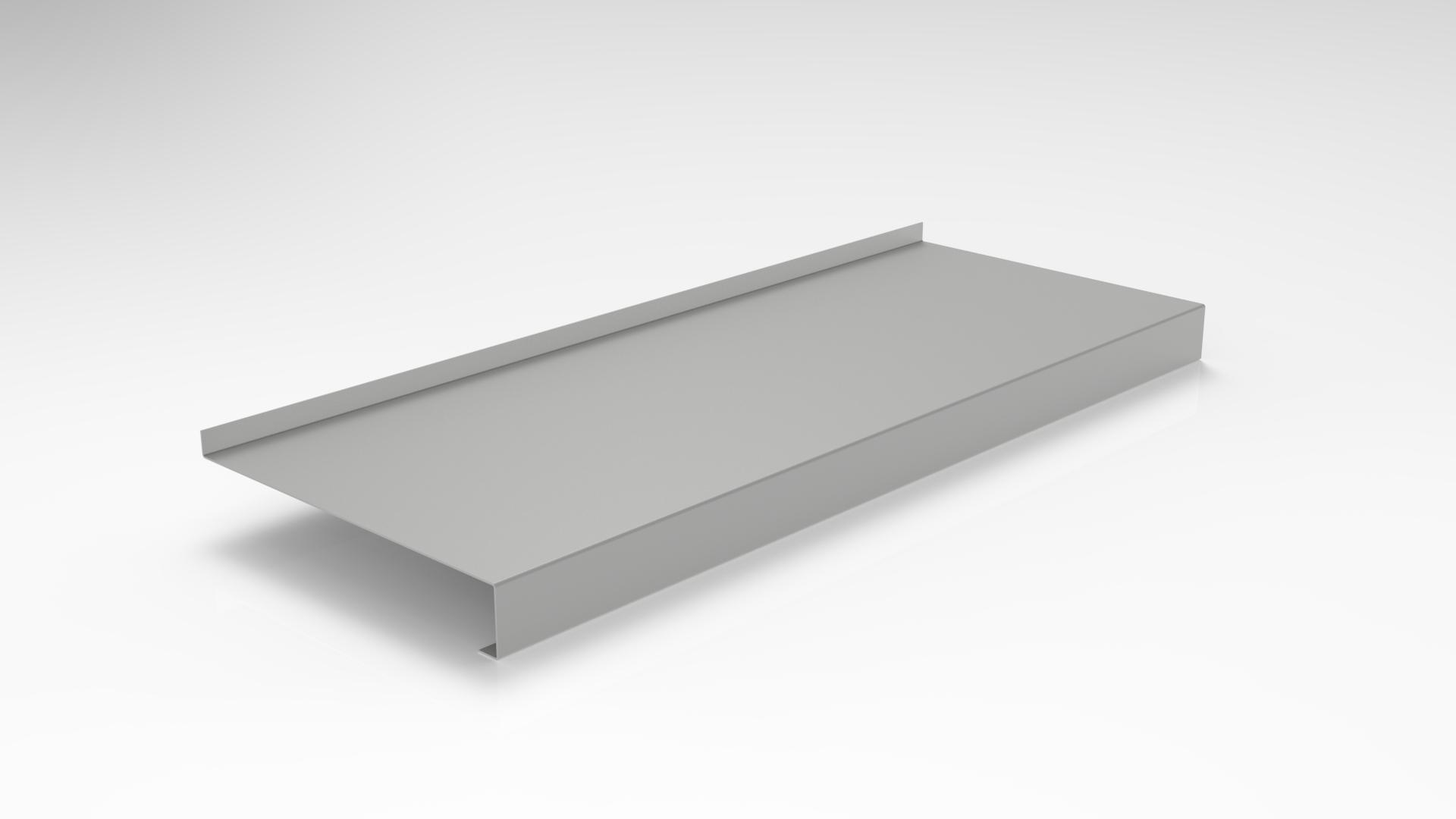
ALU-DROP® is the window sill end cap: a small-format piece fitted at each end of the profile to close it off. It's worth clarifying from the outset, because it's a common confusion even among professionals. The window sill is the horizontal profile installed beneath the window that provides the drainage fall; ALU-DROP® is the trim that seals its two side edges.
Put in one line: it's the piece that makes the difference, stopping water getting in at the sides and leaving the window sill completely finished.
It's a discreet component, marginal in cost against the opening as a whole, and yet its absence is one of the most repeated causes of damp beneath windows. In terms of building pathology, we're talking about the difference between an opening that drains correctly for decades and one that starts staining the facade in its second or third winter.
Section 03
Window Sill and End Cap: Two Different Pieces
The simplest way to understand the relationship between the two pieces is to think about the path the water takes:
- The window sill collects the water running down the glass and the frame and carries it outwards via its fall and its drip edge.
- The ALU-DROP® end cap closes off the end of that channel, so the water can't escape at the sides before it reaches the outer edge.
Put another way: the window sill sets the direction of the water and the end cap stops it being diverted. One without the other only half works.
Section 04
Why the Ends of the Window Sill Are the Critical Point
Water running across the window sill doesn't only move forwards. Wind-driven rain, the actual pitch of the profile once installed and irregularities in the substrate all mean part of the flow shifts towards the sides. If the profile finishes open, that water finds a direct route into the jamb, the sub-frame and, over time, the inside of the wall build-up.
The path water takes when the end trim is missing
- The water reaches the open end of the profile and finds nothing closing it.
- It works its way between the window sill and the jamb, by capillary action or simple gravity.
- It reaches the bedding mortar or the sub-frame insulation.
- Stains appear at the lower corners of the opening and, in cold climates, there's a risk of damage from freeze-thaw cycles.
Signs the end trim is failing
- Dark vertical stains directly beneath the corners of the window.
- Efflorescence or loss of paint adhesion on the jamb.
- Localised damp inside, in the lower part of the opening, with no plumbing leaks nearby.
- Dirt building up on the edge of the window sill, a sign the water isn't being channelled.
Section 05
How the End Cap Solves the Problem
- It closes off the end of the profile and prevents water getting in at the side.
- It channels the run-off outwards, clear of the facade plane.
- It protects the junction with the jamb, the point where most below-window leaks concentrate.
- It gives the edges a clean, consistent finish, with no cut profile ends on show.
- It avoids later touch-ups with silicones or mastics that degrade and create a maintenance burden.
Section 06
Material and Finishes
It's worth distinguishing two materials within the same assembly:
- The window sill profile is manufactured in high-durability lacquered aluminum, with 25 microns of polyester lacquer resistant to corrosion and UV.
- The ALU-DROP® end cap is manufactured in polymer, a material chosen precisely for how it behaves in this particular position.
Why polymer and not metal for the cap? For three practical reasons:
- No galvanic couple: not being metallic, the cap doesn't generate corrosion through contact with the profile or with the fixings.
- Elastic fit: the polymer allows a push-fit that adapts to the profile and absorbs the aluminum's thermal movement without opening up gaps.
- Removable without tools: the cap is fitted and removed by hand, which makes it possible to clean the inside of the channel or replace the piece without dismantling the window sill.
In a well-resolved opening, the end cap should go unnoticed: it protects the end of the profile and improves the look of the edge. If you notice it, it's usually because it doesn't match the profile or because it was improvised on site.
Section 07
How to Fit ALU-DROP®, Step by Step
- Check the cut of the window sill. The end must be clean and square so the cap seats properly.
- Verify the fall. The profile must fall towards the outside before the ends are trimmed; the cap doesn't correct a badly executed fall.
- Clean the contact area. Mortar residue or dust prevents a continuous seal.
- Offer up and align the cap. It should match the window sill profile, with no visible gaps and without forcing the piece.
- Push the cap into place. The system is designed to be installed without tools; if you have to force it, the piece isn't the right one for that profile.
- Test with water. A simple pour test at the end confirms the water exits at the front and not at the side.
Section 08
Five Common On-Site Mistakes
- Finishing with silicone alone. It solves handover day, not year five: the mastic cracks and the water gets back in.
- Leaving the profile flush with the jamb. Without enough overhang, the water ends up running down the facade.
- Improvising the cap from offcuts of sheet. Irregular edges, an incomplete seal and a finish that gives the bodge away.
- Fitting the cap before checking the fall. If the profile falls backwards, water pools inside the channel.
- Not allowing for it in the order. When the caps don't arrive with the profile, they're almost always replaced by a worse solution on the fly.
Section 09
How to Specify It in the Project
To avoid the gap between what's designed and what's built, the end cap should appear explicitly in the documentation rather than as an implicit part of the window sill:
- Include the item in the schedule of quantities, as units per opening (two per window), not by linear meter.
- Show it on the construction detail of the window sill to jamb junction.
- State the finish so it matches that of the profile and the window frames.
- Order the assembly from the same manufacturer, so profile and cap are dimensioned to each other.
Section 10
Maintenance and Service Life
The assembly needs no specific maintenance beyond periodic cleaning of the window sill: clearing leaves, dust and debris that could hold water in the channel. Because the cap is removable without tools, that cleaning is done comfortably and the piece pushes back into place. It's good practice to check the ends of the opening after periods of heavy rain, especially on facades exposed to the prevailing wind, and to confirm the run-off is still discharging clear of the front of the profile.
FAQ
Frequently asked questions
Is ALU-DROP® the window sill?+
No. ALU-DROP® are the end caps that close off the ends of the window sill. The window sill is the horizontal profile that runs beneath the window.
Are end caps essential?+
Highly recommended. Without them, water can leak through the ends into the jamb and the wall, which is precisely where most defects are found.
What material are they made from?+
The ALU-DROP® cap is polymer, while the window sill profile is lacquered aluminum with 25 microns of polyester lacquer. The combination avoids galvanic couples and allows an elastic, long-lasting fit.
Can they be removed and refitted?+
Yes. The ALU-DROP® cap is removable and is fitted and taken off without tools, which makes cleaning the channel and replacing an individual piece straightforward.
Do they fit any window sill?+
They're manufactured to match the window sill profile, closing off its sides cleanly. Ideally you order profile and caps together to guarantee the fit.
How many caps do I need per window?+
Two: one at each end of the profile.
Can they be fitted to a window that's already finished?+
In many cases yes, provided the cut of the profile is in good condition and there's access to the end. It's a common intervention once stains have already appeared on the jamb.
Isn't sealing the end with silicone enough?+
Not as a permanent solution. Sealant ages and loses adhesion; the cap provides a permanent mechanical closure and the sealant becomes a secondary complement.
Do they also work with stone or ceramic window sills?+
The piece is designed for the aluminum profile. On substrates of other materials, the junction with the jamb is resolved with different construction details.
Share