Key takeaways
5 min read
Key point 1
Coping is the piece that crowns the wall or parapet and stops water penetrating through the upper joint, the main entry point for facade moisture — the reason copings are specified to BS 5642-2 in the UK.
Key point 2
The three common alternatives are concrete, ceramic, and aluminum. Concrete is the cheapest upfront; ceramic brings traditional aesthetic value; polyester-painted aluminum offers the least maintenance over the building's service life.
Key point 3
Metal aluminum coping requires no re-pointing or re-sealing: concrete and ceramic need mortar joint inspection every few years, especially in climates with frost or coastal exposure.
Key point 4
Industrias Mas's ALU-CLICK® system manufactures aluminum wall caps to measure from 70 mm to 600 mm wide, with no silicone and no visible fixings, with quotes in 24 business hours.
Key point 5
For new housing, multi-family buildings, industrial buildings, and projects with contemporary design, polyester-painted aluminum is today the standard option; concrete remains valid on projects where initial cost outweighs service life.
In this article
- What Is Wall Coping and Why Does Choosing Well Matter?
- Concrete Coping: When It Works and Where It Falls Short
- Ceramic Coping: Traditional Aesthetics and Technical Limitations
- Metal Aluminum Coping: The Standard in New Construction
- Direct Comparison: Concrete vs. Ceramic vs. Aluminum
- Which Coping to Choose Based on Project Type
- Why Choose Industrias Mas
- Frequently asked questions
Properly protecting the top of a wall is one of the construction details with the biggest impact on a building's durability. Wall and parapet coping is specified to BS 5642-2 in the UK, and is one of the critical points for protection against moisture: if the upper joint fails, water penetrates by capillary action and the facade deteriorates from within. The choice between concrete, ceramic, or aluminum coping shapes the project's cost, maintenance, and appearance for decades.
Section 02
What Is Wall Coping and Why Does Choosing Well Matter?
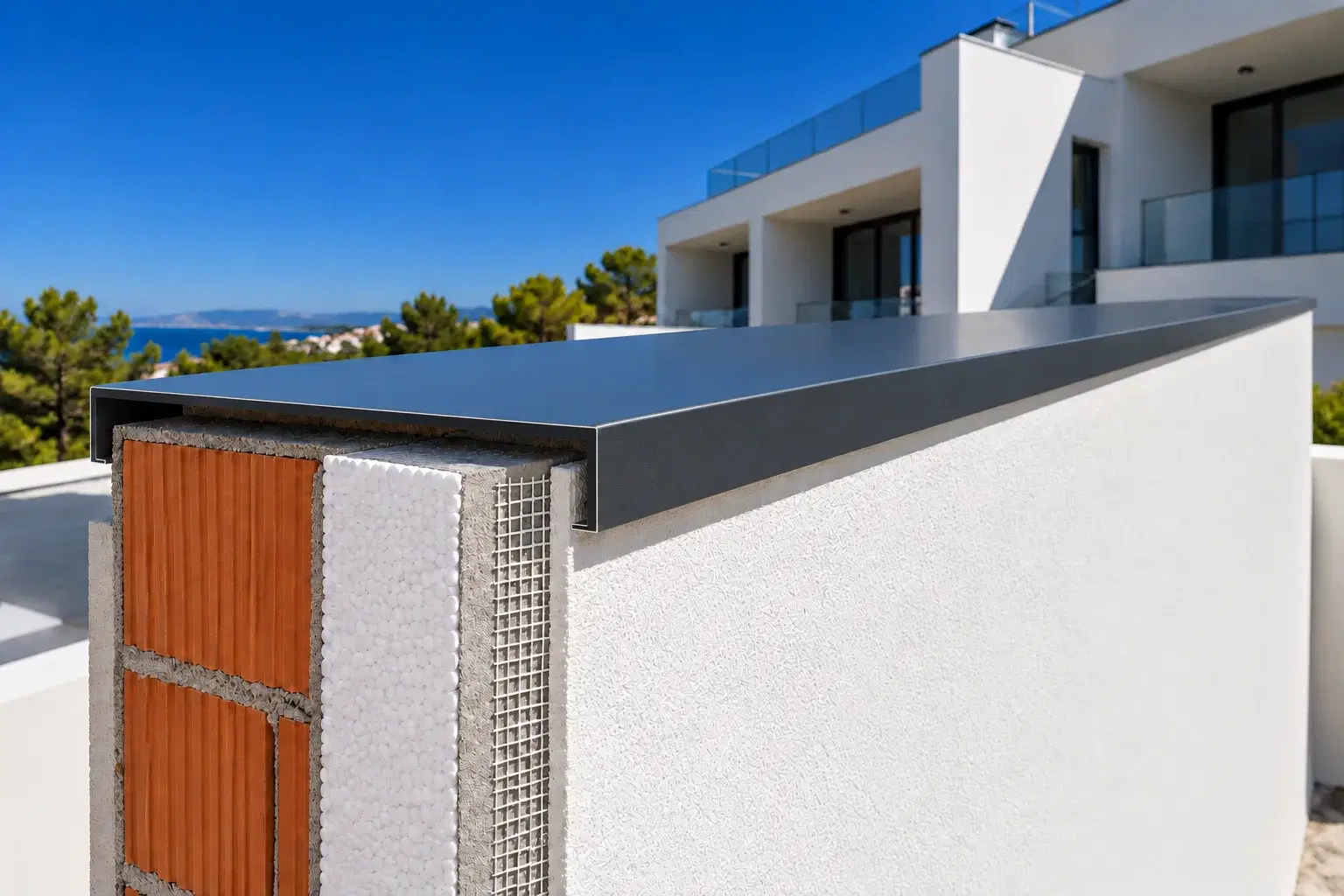
Coping, also called a wall cap, is the prefabricated piece placed on top of a wall or parapet to divert rainwater, protect the wall material, and give a clean finish to the facade's top edge. Its technical function is twofold: acting as an umbrella over the wall and creating a lateral overhang that keeps water away from the vertical face of the wall. When the coping is properly sized and installed, water runs off the sides and falls outward; when it isn't, water pools at the joint and deterioration begins.
Section 03
Concrete Coping: When It Works and Where It Falls Short
Precast concrete coping is the most traditional solution in Spain. It's heavy, rigid, and sold in standardized pieces bedded in mortar. Its strengths are low initial cost, mechanical impact resistance, and a plain look that suits conventional buildings. Its weaknesses are the weight (requiring on-site lifting equipment), visible mortar joints that need periodic re-pointing, limited dimensional customization, and the risk of efflorescence from the cement's own salts.
Section 04
Ceramic Coping: Traditional Aesthetics and Technical Limitations
Ceramic coping gives a warmer finish and suits tiled roofs or exposed-brick facades. It's light compared to concrete and resists UV radiation well. Its main weakness is fragility: any impact or frost that gets into a micro-crack causes breaks that force whole pieces to be replaced. Joints remain mortar-based and therefore need maintenance. The range of dimensions is limited and it's rarely made to measure.
Section 05
Metal Aluminum Coping: The Standard in New Construction
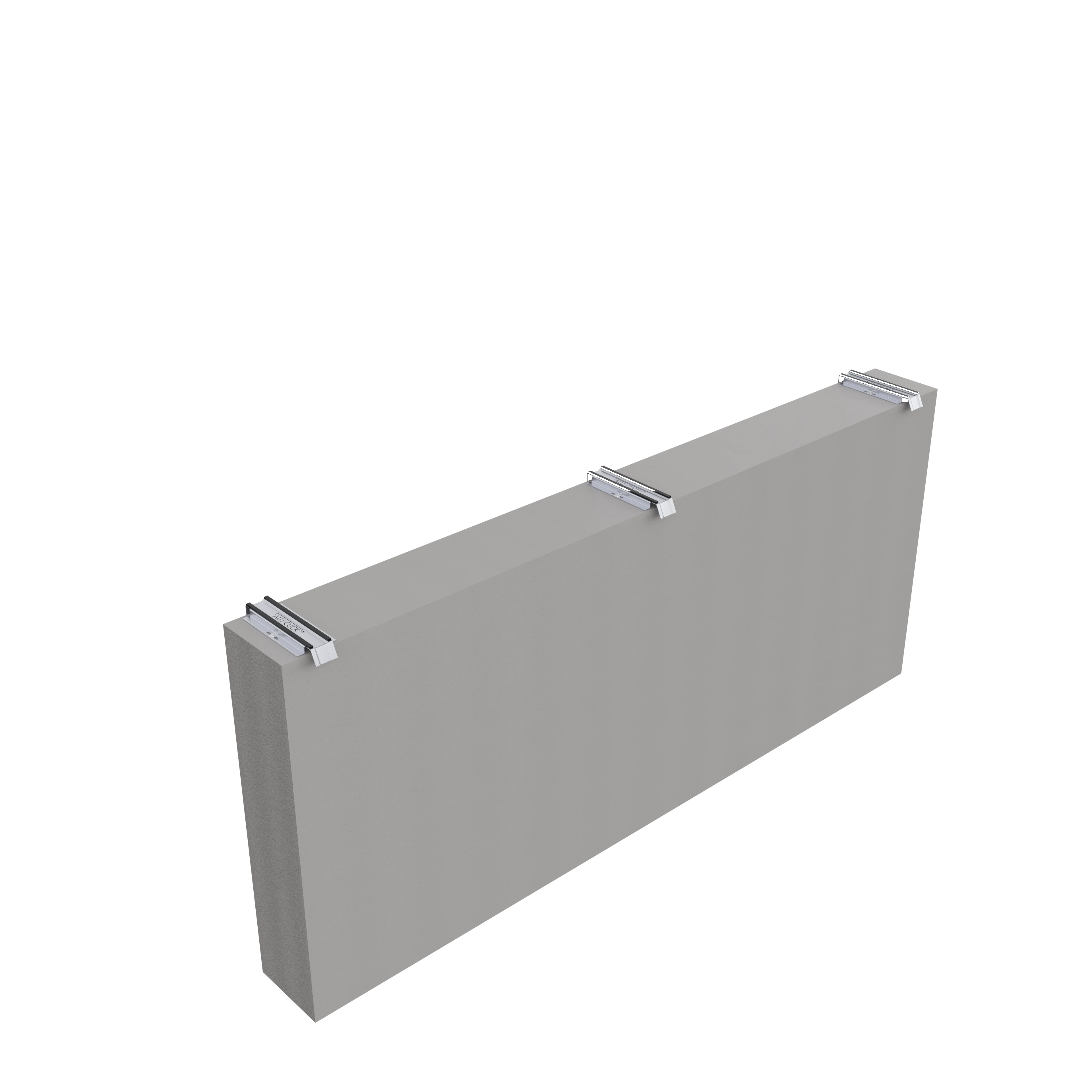
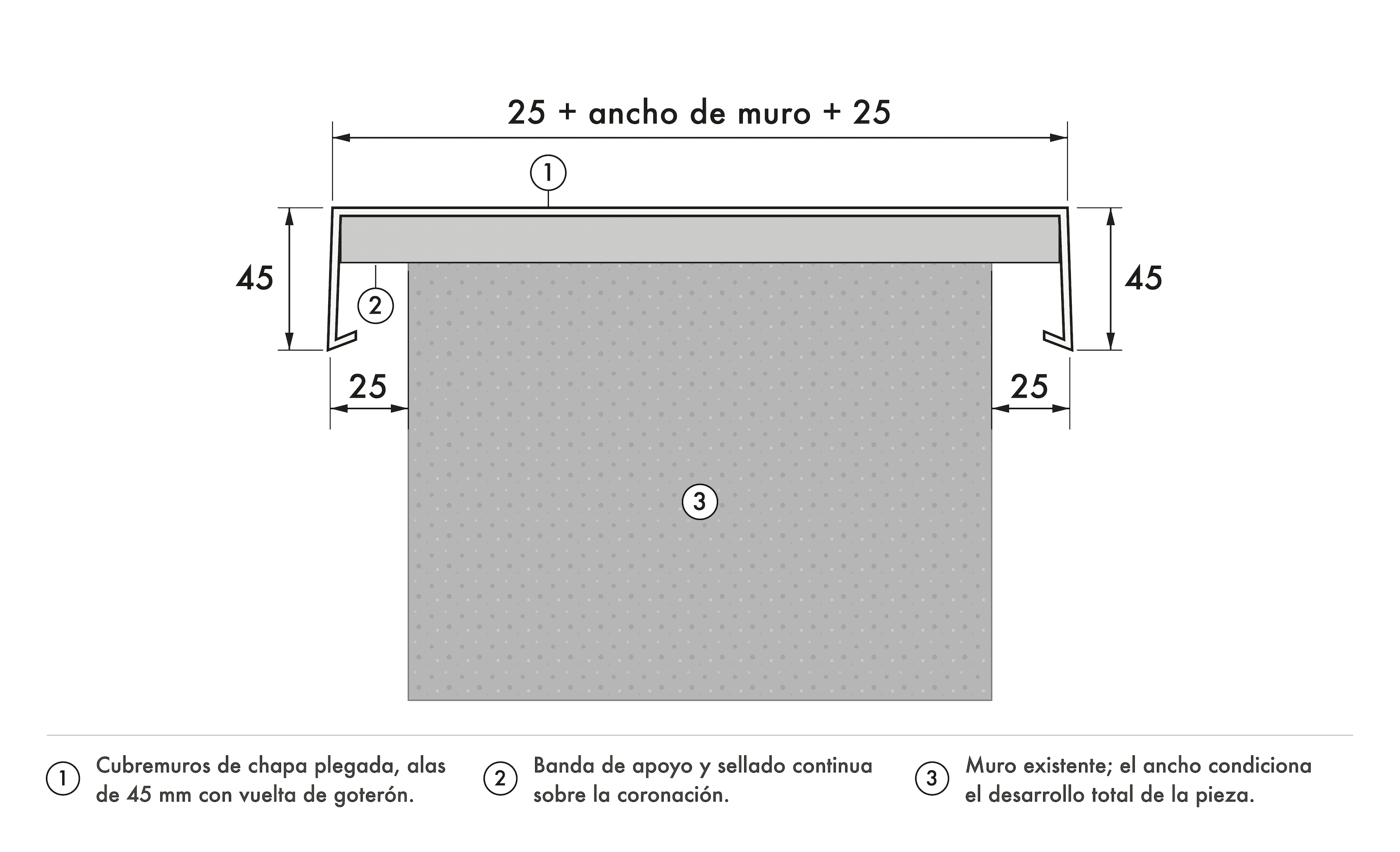
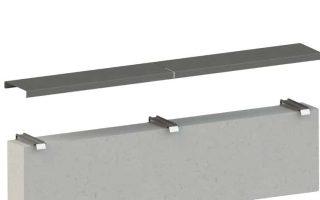
Polyester-painted aluminum metal coping has become the go-to option in new construction and qualified renovation. Pieces are made to measure in continuous profiles, polyester-painted in RAL colors to blend with the facade, and installed dry, with no mortar. Industrias Mas's ALU-CLICK® coping is manufactured in 12/10 mm polyester-painted aluminum with 25 microns of polyester lacquer on both sides, giving it far greater corrosion resistance than standard painted sheet metal, and is fixed with a mechanical system with no silicone or visible screws from the outside.
Section 06
Direct Comparison: Concrete vs. Ceramic vs. Aluminum
In structural durability all three solutions are valid, but their behavior against water differs greatly. Concrete requires periodic joint re-pointing and can develop efflorescence. Ceramic is sensitive to frost and impacts. Aluminum with bituminous sealed joints eliminates infiltration points. In maintenance, aluminum clearly wins: no re-pointing, no re-sealing, no replacing broken pieces. In weight, aluminum is between 10 and 20 times lighter than concrete, which speeds up installation and reduces dead load on the coping. In dimensional customization, aluminum is manufactured from 70 mm to 600 mm wide, exact to the project; concrete and ceramic require on-site cutting. In acquisition cost concrete starts out cheaper, but the total cost installed and maintained over 10 years usually evens out or tips in aluminum's favor.
Section 07
Which Coping to Choose Based on Project Type
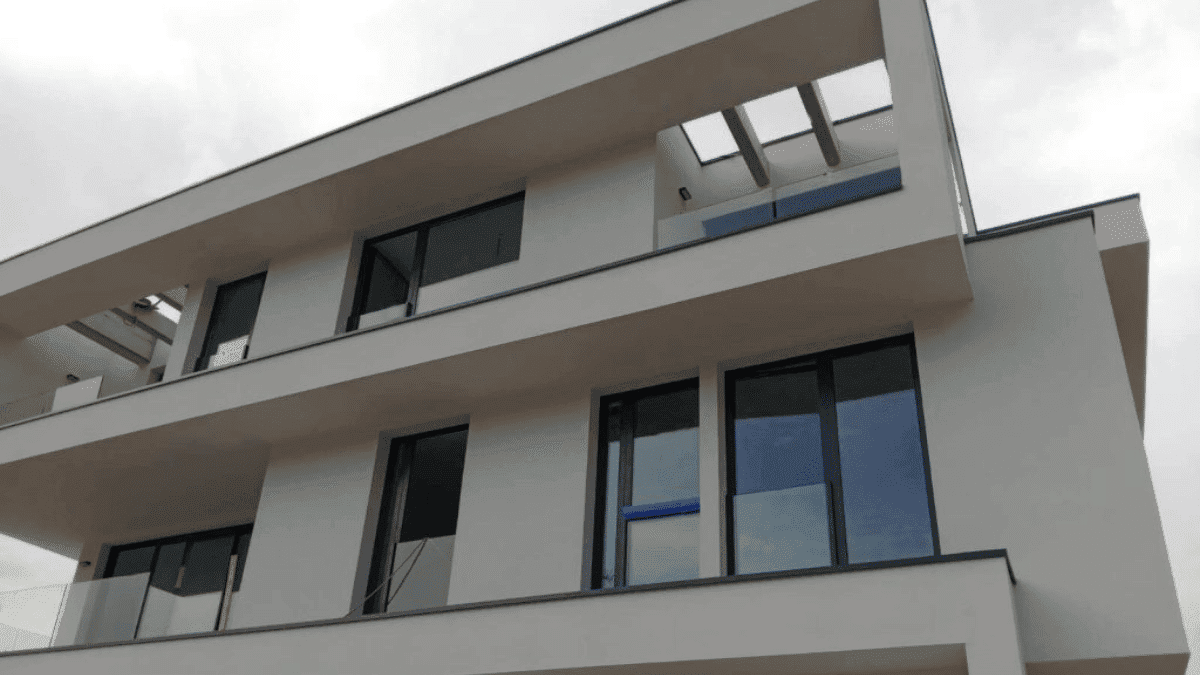
For new housing and multi-family developments with flat or accessible roofs, metal aluminum coping is the standard choice: fast installation, a clean finish, and no ongoing maintenance for the building community. For industrial buildings and commercial buildings with long linear runs, aluminum drastically cuts installation hours and long-term leak risks. For renovating traditional facades with ceramic roof tile, ceramic coping can preserve the aesthetic coherence, accepting the maintenance that comes with it. For plot boundary walls on a tight budget with no aesthetic requirement, concrete remains a defensible choice.
Section 08
Why Choose Industrias Mas
Industrias Mas has manufactured aluminum coping in Tàrrega (Lleida) since 1968 and holds ISO 9001:2015 certification for manufacturing. The ALU-CLICK® system eliminates on-site silicone, hides the fixings, and is made to measure from 70 mm to 600 mm wide. It's delivered in four standard RAL colors — anthracite (RAL 7016), natural (RAL 9006), white (RAL 9003), and dark grey (RAL 7022) — and in any RAL color on request. Quotes are prepared within 24 business hours, and manufacturing takes 5 to 10 business days for made-to-measure orders.
FAQ
Frequently asked questions
What is coping and what is it for?+
Coping is the construction element that crowns and protects the top of a wall, parapet, or enclosure. Its function is to stop rainwater penetrating through the wall's upper joint, preventing leaks, damp in the facade, and structural deterioration of the wall.
What's the difference between coping and a wall cap?+
The terms are used interchangeably. 'Coping' is the traditional name for the top finishing element; 'wall cap' is the technical term that has become popular in construction to refer to the prefabricated pieces (concrete, ceramic, or aluminum) that perform this function. Industrias Mas's ALU-CLICK® wall cap is, technically, a polyester-painted aluminum metal coping.
When is it better to choose metal coping over concrete?+
Metal aluminum coping is worthwhile when you prioritize a maintenance-free service life, fast installation with no wet trades, climates with frost or high humidity, contemporary design, or the need for made-to-measure fabrication. Concrete is cheaper to buy but requires periodic re-pointing, weighs more, and requires mobilizing lifting equipment on the roof.
How long does polyester-painted aluminum coping last compared to concrete?+
Polyester-painted aluminum coping with 25 microns of polyester lacquer on both sides can keep its finish for decades with no significant intervention. Concrete or ceramic coping physically lasts a long time, but mortar joints usually need repair every 5–10 years, especially in climates with freeze-thaw cycles.
Is metal coping more expensive than concrete?+
The cost per linear meter of the piece is usually higher for aluminum, but the total installed cost comes close to or matches concrete: aluminum installs faster, needs no mortar, requires no heavy lifting equipment, and eliminates later joint maintenance. Over the building's service life, it's usually the more cost-effective option.
Can metal coping be installed on an already-built wall?+
Yes. The ALU-CLICK® system is fixed with screwed plates over the wall's existing coping, with no need for wet trades or demolishing previous finishes. It's common to replace deteriorated concrete coping with polyester-painted aluminum when renovating roofs and facades.
Related product
ALU-CLICK®
Wall Copings
Polyester-painted aluminum wall copings with the silicone-free ALU-CLICK® system
Share