Key takeaways
8 min read
Key point 1
The static chimney cap improves draft by harnessing wind through the Venturi effect, with no motor, no power consumption, and no moving-parts maintenance.
Key point 2
The mechanical chimney cap has one or more motors and guarantees extraction regardless of wind; it's the solution for bathrooms, kitchens, and humid areas requiring forced ventilation.
Key point 3
Rule of thumb: start with the static version and reserve the mechanical one for when natural draft is consistently insufficient or regulations require forced ventilation.
Key point 4
The motor is sized according to the airflow to be extracted (m³/h), not the piece's exterior size, which is made to measure for the masonry surround.
Key point 5
A mechanical system needs a power supply and a voltage regulator; the static version needs neither.
In this article
- Static vs. Mechanical: The Fundamental Difference
- How the Static Chimney Cap Works (the Venturi Effect)
- How the Mechanical Chimney Cap Works (with a Motor)
- Direct Comparison: Summary
- When to Choose Each One
- Sizing the Motor: Airflow, Power, and Noise
- Power Consumption, Noise, and Maintenance
- Material, Finishes, and Made-to-Measure Fabrication
- What the Regulations Say
- VENTUM® Static and E Series Chimney Caps
- Frequently asked questions
Some smoke or ventilation outlets work perfectly well on their own, while others need a helping hand. When draft falls short, or when you need to guarantee air renewal in a bathroom or kitchen, the same question always comes up: is a static chimney cap that harnesses the wind enough, or do you need a mechanical one with a motor? Both aim for the same goal — extracting air or smoke — but by very different means. This guide compares the two systems clearly: how they work, what each one offers, how much they consume, how much noise they make, and, above all, how to know which one you need.
Section 02
Static vs. Mechanical: The Fundamental Difference
The distinction is simple and worth having clear before going into detail. A static chimney cap has no moving parts: it's a piece whose shape is designed to let the wind do the work. A mechanical chimney cap, by contrast, houses one or more motors inside that extract air actively, whether the wind blows or not.
Put another way: the static version optimizes the outlet's natural conditions; the mechanical version replaces them with forced extraction. The first depends on wind and thermal draft; the second, on the electrical current. That's the dividing line behind almost every decision we'll cover below.
Section 03
How the Static Chimney Cap Works (the Venturi Effect)
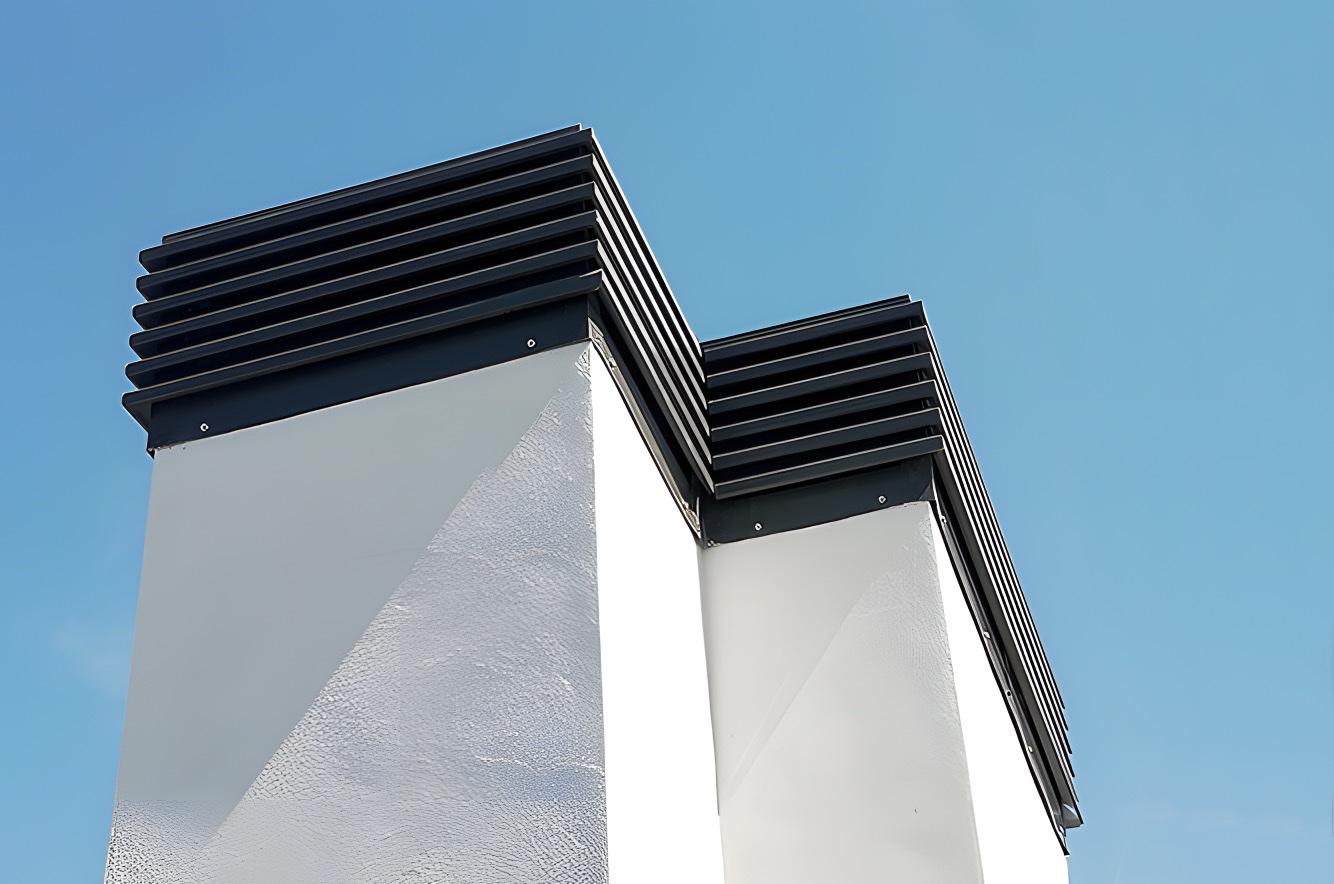
The static chimney cap harnesses the Venturi effect. When wind hits the piece and is forced to accelerate as it passes between its louvers, its pressure drops, and that low-pressure zone above the duct's mouth 'pulls' air or smoke outward. It's the same principle used by many passive ventilation systems.
In a well-designed cap, the horizontal louvers generate that suction exactly when it's needed most: on windy days, which are also the days a poorly designed cap would cause backflow. The same geometry that improves draft also reduces turbulence, so air flows without sudden disruption and whistling is reduced. All of this with no motor, no electricity, and no wear on moving parts.
Its limit is obvious: performance depends on available wind. On calm days its help is smaller, though in those conditions the duct's natural thermal draft is usually enough on its own.
Section 04
How the Mechanical Chimney Cap Works (with a Motor)
The mechanical chimney cap houses one or more motors inside, sized to the airflow that needs extracting. It's designed to ventilate humid areas, bathrooms, and kitchens, spaces where, in the UK, Approved Document F requires a forced indoor-air-renewal system. Unlike the static version, it doesn't wait for the wind to blow: the motor guarantees extraction constantly.
An important design detail: motor power is independent of the piece's exterior dimensions. The masonry surround is made to measure and the motor is chosen separately, based on the required airflow. To regulate that power and adjust the flow rate to each installation, the system needs an electronic voltage regulator.
Section 05
Direct Comparison: Summary
Side by side, the two systems differ on the points that matter most when deciding:
- Principle. the static version uses the Venturi effect and harnesses the wind; the mechanical version extracts air by force with a motor.
- Power consumption. the static version uses none; the mechanical version does, depending on the motor.
- Dependence on wind. the static version depends on wind; the mechanical version works the same whether there's wind or not.
- Moving parts. the static version has none; the mechanical version has a motor.
- Noise. the static version is very quiet; the mechanical version runs around 48–58 dB depending on the motor.
- Maintenance. the static version barely needs a visual check; the mechanical version needs periodic motor servicing.
- Typical use. the static version, for chimneys with marginal draft or backflow problems; the mechanical version, for bathrooms, kitchens, and humid areas.
- Regulations. the static version optimizes the outlet; the mechanical version lets you meet the forced-ventilation requirement set by Approved Document F.
- Installation. the static version just needs fitting; the mechanical version also needs a power supply and a voltage regulator.
Section 06
When to Choose Each One
The logical sequence is to start with the static chimney cap, since it uses no energy and needs no maintenance on moving parts. It works well for ducts with marginal draft, occasional backflow with certain winds, or annoying whistling. In most chimneys, it's the simplest and most economical fix.
Moving up to a mechanical chimney cap is justified in two scenarios. The first is when natural draft is consistently insufficient: short ducts, ducts with many bends, high airflow demand, or locations very sheltered from the wind, where a passive cap's help isn't enough. The second is when regulations require forced air renewal — typically in home bathrooms and kitchens — and extraction can't be left to the wind. In those cases, the motor isn't a luxury, it's a requirement.
Section 07
Sizing the Motor: Airflow, Power, and Noise
When the solution is mechanical, the key isn't the size of the piece but the airflow to be extracted, measured in cubic meters per hour (m³/h). The motor is chosen based on that figure. As a reference, the VENTUM® E Series range covers motors from small airflows up to demanding installations (all at 230 V), with the following specs — power, speed, sound pressure, and minimum surround size:
- HRB / 4-200 — 35 W · 1,475 rpm · 53 dB · minimum surround 300 × 300 mm.
- CRHB / 4-250 — 52 W · 1,475 rpm · 58 dB · minimum surround 445 × 445 mm.
- CRHB / 6-315 — 69 W · 980 rpm · 48 dB · minimum surround 540 × 540 mm.
- CRHB / 6-355 — 87 W · 955 rpm · 58 dB · minimum surround 610 × 610 mm. Data from the VENTUM® E Series technical datasheet.
As a rough guide, a single Ø 100 mm duct at 4 m/s moves around 70 m³/h; for larger airflows, several ducts are combined or a bigger motor is used. An oversized motor uses more power and makes more noise than needed; an undersized one won't renew the air properly. That's why correct sizing — together with the voltage regulator that adjusts power — is what makes the installation work as it should.
Section 08
Power Consumption, Noise, and Maintenance
This is where the two solutions diverge the most. The static chimney cap uses no power at all, and its maintenance amounts to an occasional visual check; with no moving parts, there's no motor to wear out. Its noise is essentially that of the wind itself, and an aerodynamic shape reduces it rather than amplifying it.
The mechanical version, by contrast, consumes electricity — modestly: typical motors run between 35 and 87 W — and produces a sound level that, depending on the model, sits around 48–58 dB. It also requires periodic motor servicing. None of this disqualifies it: these are the logical trade-offs for guaranteeing airflow no matter what. The decision, again, comes down to whether the installation genuinely needs that guarantee.
Section 09
Material, Finishes, and Made-to-Measure Fabrication
In both cases the piece sits exposed on the roof and must be made from materials that withstand the elements: polyester-painted aluminum or AISI 316 stainless steel for aggressive or coastal environments. The aluminum finish is available in several standard RAL colors — black, anthracite, grey, white, and natural — and the stainless steel in a polished finish.
Made-to-measure fabrication of the masonry surround is a shared, decisive point. On the static version, a gap-free fit is what lets the geometry work as designed; on the mechanical version, the surround is sized to house the chosen motor without changing the exterior look. In both versions, the corners are finished with no sharp edges, and the face can be removable to make maintenance easier.
Section 10
What the Regulations Say
In the UK, ventilation and the removal of stale air from buildings are governed by Approved Document F, which sets the obligation to renew the indoor air of homes — which in bathrooms and kitchens usually means extract ventilation, intermittent or continuous. The evacuation of combustion products, for its part, is resolved according to separate regulations specific to the appliance and the installation. A static chimney cap optimizes the outlet's behavior within that framework; a mechanical chimney cap lets you meet the forced-ventilation requirement when natural draft isn't enough. In both cases, the installation as a whole must be properly designed: the piece optimizes or guarantees, but doesn't replace good duct design.
Section 11
VENTUM® Static and E Series Chimney Caps
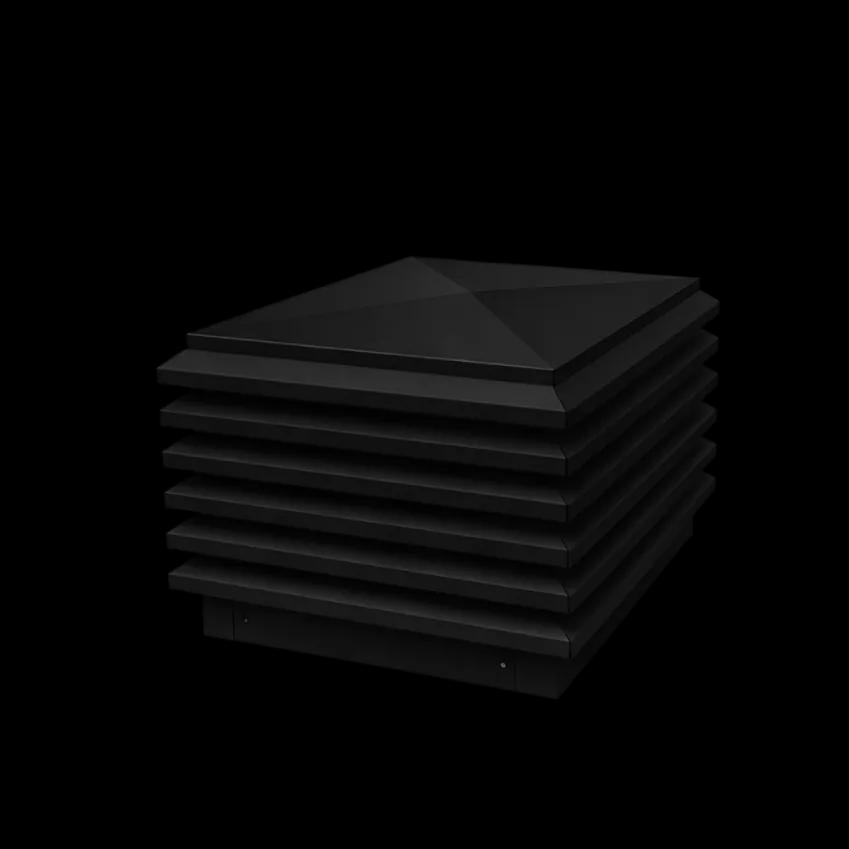
VENTUM® is Industrias Mas's range of chimney and ventilation caps, available in a static version and a mechanical version (E Series). The static version harnesses the Venturi effect with an anti-backflow, six-louver horizontal design; the E Series adds a motor for installations that require forced extraction. Both are made from polyester-painted aluminum or AISI 316 stainless steel, to measure for the masonry surround, and with ISO 9001:2015 certification. If your case is marginal draft or a noisy chimney cap, the static version is usually the more efficient solution; if you need to guarantee airflow in a bathroom or kitchen, the E Series is the option.
FAQ
Frequently asked questions
What's the difference between a mechanical and a static chimney cap?+
The static version harnesses wind through the Venturi effect, with no motor. The mechanical version has one or more motors and extracts air actively, regardless of wind.
When do I need a mechanical one?+
When natural draft is consistently insufficient, or when regulations require forced air renewal, as in home bathrooms and kitchens.
How much power does a mechanical chimney cap use?+
It depends on the motor. Typical models run between 35 and 87 W at 230 V; power is adjusted with an electronic voltage regulator.
Is a chimney cap with a motor noisy?+
Depending on the motor, sound pressure sits around 48–58 dB. The static version, having no motor, generates barely any noise of its own.
Can it be made to measure?+
Yes. Both the static and mechanical versions are made to measure for the masonry surround; on the mechanical version, motor power is independent of the exterior dimensions.
Related product
VENTUM®
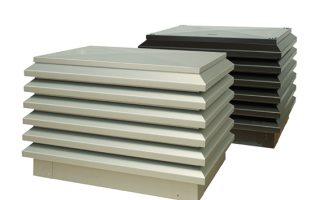
Made-to-Measure Chimney Caps and Cowls
Made-to-measure chimney cap, static and mechanical
Share