Key takeaways
6 min read
Key point 1
Polyester-painted aluminum: doesn't rust, is the lightest option, and takes polyester lacquer in any RAL color.
Key point 2
Zinc: develops a self-protecting patina; in quartz-zinc, corrosion resistance runs from 50 to 100 years depending on the environment.
Key point 3
Galvanized steel: the most affordable option, with 275 g/m² hot-dip galvanizing and 25-micron lacquer on the exposed face.
Key point 4
Galvanic corrosion: mixing different metals in the presence of moisture speeds up corrosion of the less noble one.
Key point 5
Made-to-measure fabrication: classic profiles, design profiles, and custom project-defined profiles, with no minimum run length.
In this article
- The Three Materials at a Glance
- Polyester-Painted Aluminum: Light Weight and Zero Rust
- Zinc Gutters: Patina, Quartz-Zinc, and Zinc-Titanium
- Galvanized and Pre-Coated Steel: The Economical Option
- Galvanic Corrosion: Watch Out When Mixing Metals
- Thermal Expansion: The Detail That Gets Forgotten on Long Runs
- Profiles, Finishes, and Lead Times We Manufacture
- How to Choose Based on Your Project
- Frequently asked questions
A gutter's material shapes its service life, its maintenance, and even its risk of corrosion when it comes into contact with other metals on the roof. We compare the three most common materials — polyester-painted aluminum, zinc, and galvanized steel — using the technical data from our catalog, and explain how to avoid galvanic corrosion when combining them with downpipes, roofing, or fixings.
Section 02
The Three Materials at a Glance
Before getting into detail, here are the differences that matter most on site: durability, weight on the structure, maintenance, and available finish.
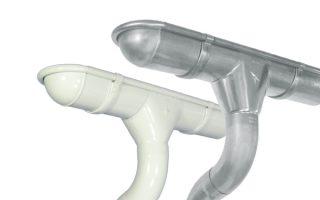
- Polyester-painted aluminum. Very high durability, because it doesn't rust. It's the lightest of the three, needs minimal maintenance, and is finished with polyester lacquer in any RAL color.
- Zinc. Very high durability thanks to the patina it develops. Medium weight, minimal maintenance, and a natural grey finish, in quartz-zinc and zinc-titanium grades.
- Galvanized steel. Medium-to-high durability, dependent on its coating. It's the heaviest and most affordable option, supplied galvanized or pre-coated in color.
Section 03
Polyester-Painted Aluminum: Light Weight and Zero Rust
Aluminum doesn't form red rust: on contact with air it develops a protective layer of alumina. It's the lightest of the three materials, which reduces the load on the eave, makes handling on the roof easier, and lets you install long runs with fewer supports.
Its big aesthetic advantage is the lacquer finish: it can be finished in any RAL color to match the facade or window frames, something zinc and galvanized steel don't offer with the same versatility.
When to choose it
- Projects with a defined color scheme: when the gutter needs to match the RAL of the window frames or facade cladding.
- Roofs with limited load capacity: renovations over old eaves or lightweight structures.
- Minimal maintenance: no repainting or coating checks needed over the medium term.
Section 04
Zinc Gutters: Patina, Quartz-Zinc, and Zinc-Titanium
Zinc gutters develop a self-protecting carbonate patina over time, giving them that characteristic grey tone highly valued in renovation and traditional architecture. Their durability is excellent and their maintenance minimal. In exchange, zinc is heavier than aluminum and its material cost is higher.
In our catalog, zinc comes in two grades:
- Quartz-zinc. A satin, almost velvety grey, very close to the natural patina. It's produced by treating the zinc at the factory in a solution that alters its crystalline structure, giving corrosion resistance of 50 to 100 years depending on the atmospheric environment. It's a zinc alloy rolled with copper and titanium to EN 988.
- Zinc-titanium. An alloy made from 99.995%-pure Z1 zinc (EN 1179) with controlled additions of titanium (0.06–0.2%), copper, and aluminum. Tensile strength above 150 N/mm² and can be bent 180° without cracking.
One important note: zinc is sensitive to water carrying copper runoff, a point we cover in the next section.
Section 05
Galvanized and Pre-Coated Steel: The Economical Option
Galvanized steel starts from a lower price point and adds rigidity. Its weak point is that protection depends on the zinc coating: if it gets scratched, cut without protecting the edge, or accumulates dirt, rust can appear over the years. It's a good option when budget comes first and you accept periodic inspection.
Our pre-coated steel gutters start from hot-dip galvanized sheet with a zinc coating of 275 g/m² on both faces, to EURONORM 142-79. On top of that base, a lacquer coating of 25 ± 3 microns is applied to the exposed surface and 17 ± 3 microns to the inner face, with an F film hardness on the KOH-I-NOOR scale. The pigmentation is subject to stability testing, so the tone holds up in both sun-exposed and sheltered areas.
Standard pre-coated steel colors
- Brown — RAL 8019.
- Tile red — RAL 3009.
- Grey-white — RAL 9002.
- Forest green — RAL 6002.
Section 06
Galvanic Corrosion: Watch Out When Mixing Metals
When two different metals touch in the presence of moisture, a small electrical cell forms and the less noble metal corrodes faster. It's the most common mistake in drainage systems, especially when combining a gutter, downpipe, fixings, and roof made of different materials. Here are the most common combinations:
- Aluminum + copper — high risk. Avoid direct contact, and don't let water from copper elements run onto aluminum.
- Zinc + copper — high risk. Water that has washed over a copper roof or gutter attacks zinc.
- Aluminum + galvanized steel — low-to-medium risk. An acceptable combination; worth monitoring in marine environments.
- Zinc + galvanized steel — low risk. They're compatible.
- Aluminum + stainless steel — low risk. Compatible with the right fixings.
Rule of thumb: keep the same material in the gutter and downpipe wherever you can, and avoid letting water fall from a copper element onto aluminum or zinc.
Section 07
Thermal Expansion: The Detail That Gets Forgotten on Long Runs
All metals expand with heat, and in a gutter that translates into longitudinal movement. Zinc-titanium, for example, expands 2.2 mm per meter for every 100°C of temperature change: over a continuous 10-meter run with a 50°C swing between winter and summer, the movement exceeds a centimeter.
That's why it's worth accounting for in the design:
- Expansion joints on long continuous runs, especially on south-facing roofs.
- Fixings that allow movement, without clamping the gutter along its full length.
- Overlaps and seals sized to absorb that movement without opening up the joint.
Section 08
Profiles, Finishes, and Lead Times We Manufacture
The whole range is made to measure in the same materials and colors, so the choice of profile is independent of the finish.
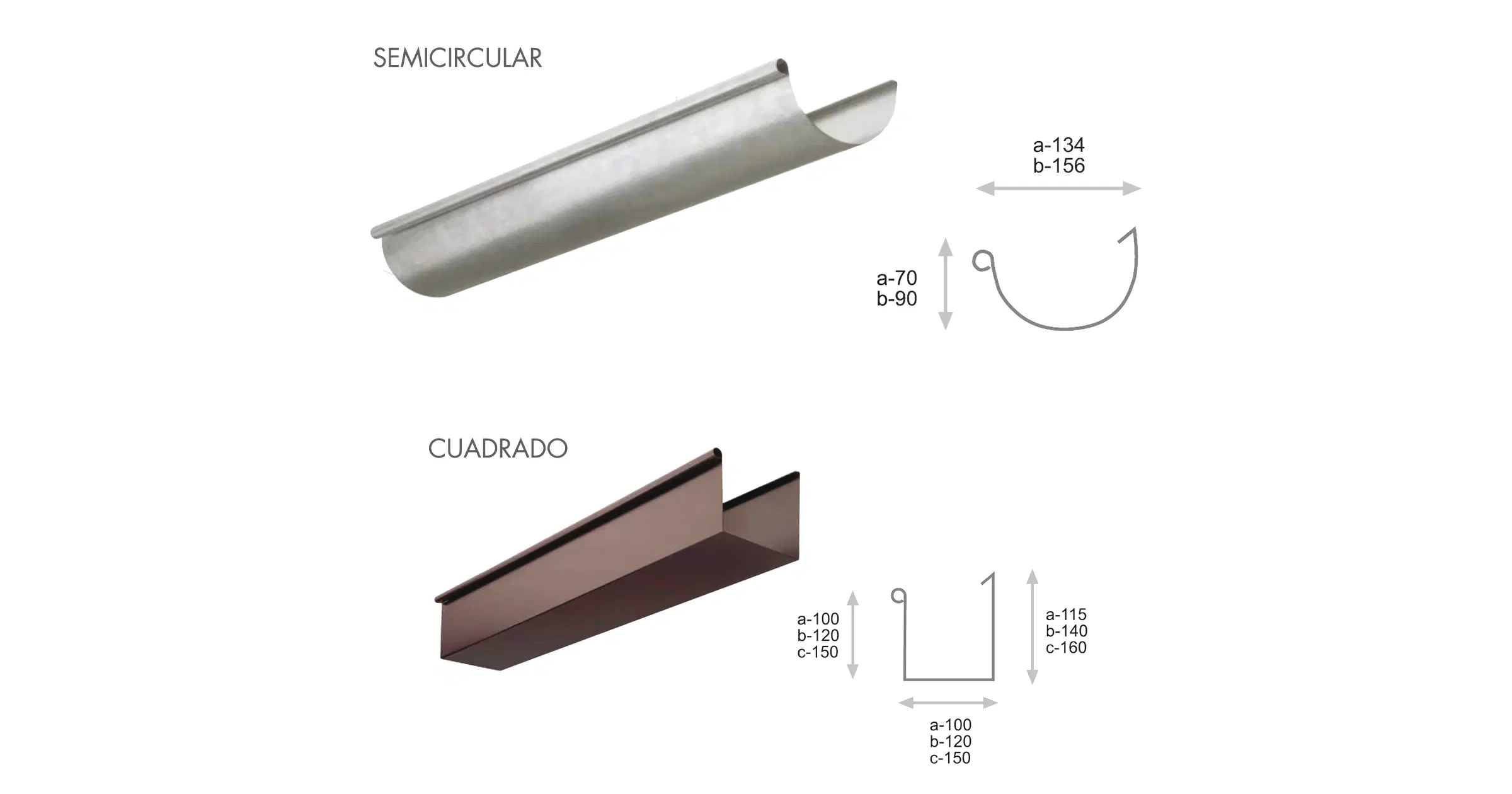
- Classic profiles. Half-round, in 280 and 333 mm girths, and square in 100×100, 120×120, and 150×150 mm.
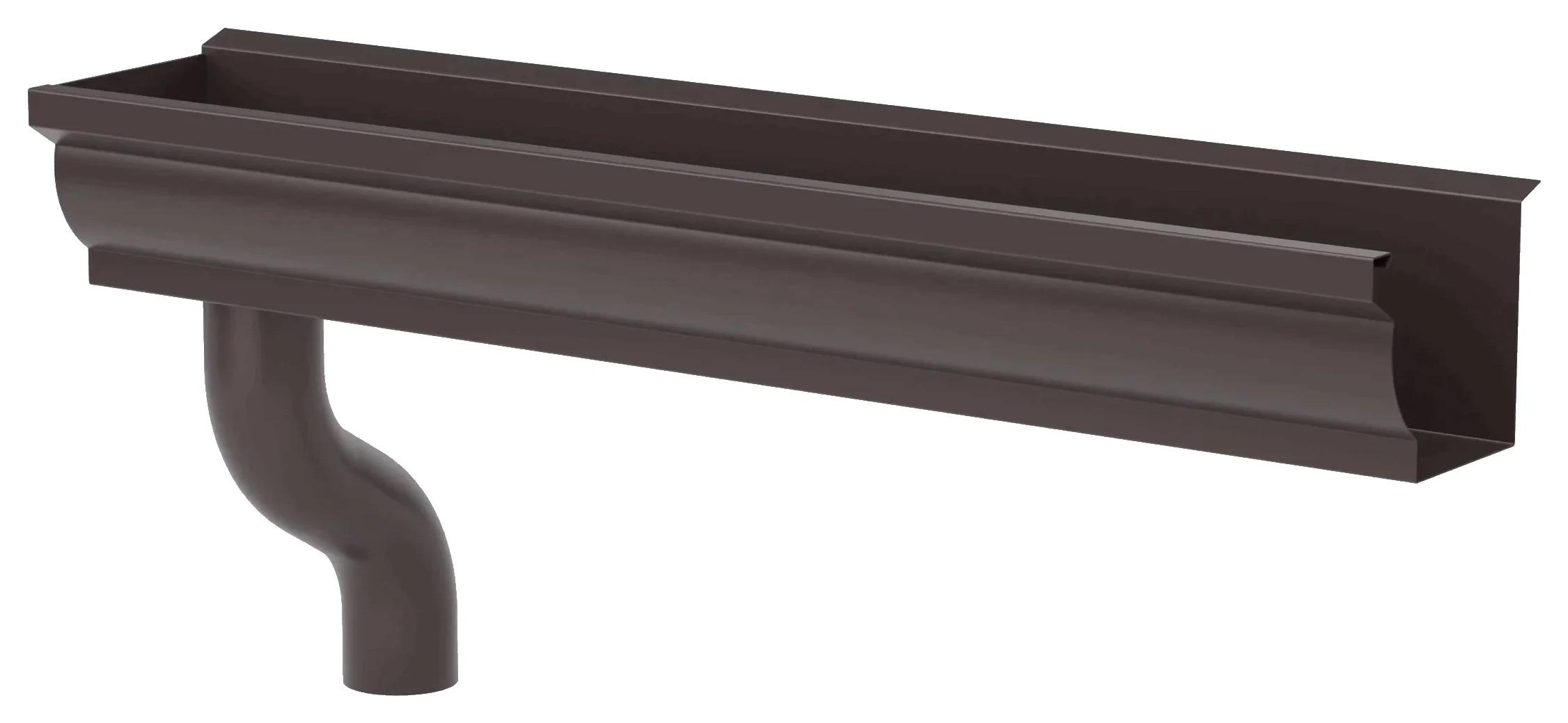
- IMS design profiles. IMS 1 through IMS 7, in 416 and 500 mm girths, and IMS 751 with a 750 mm girth for large-surface roofs and industrial buildings.
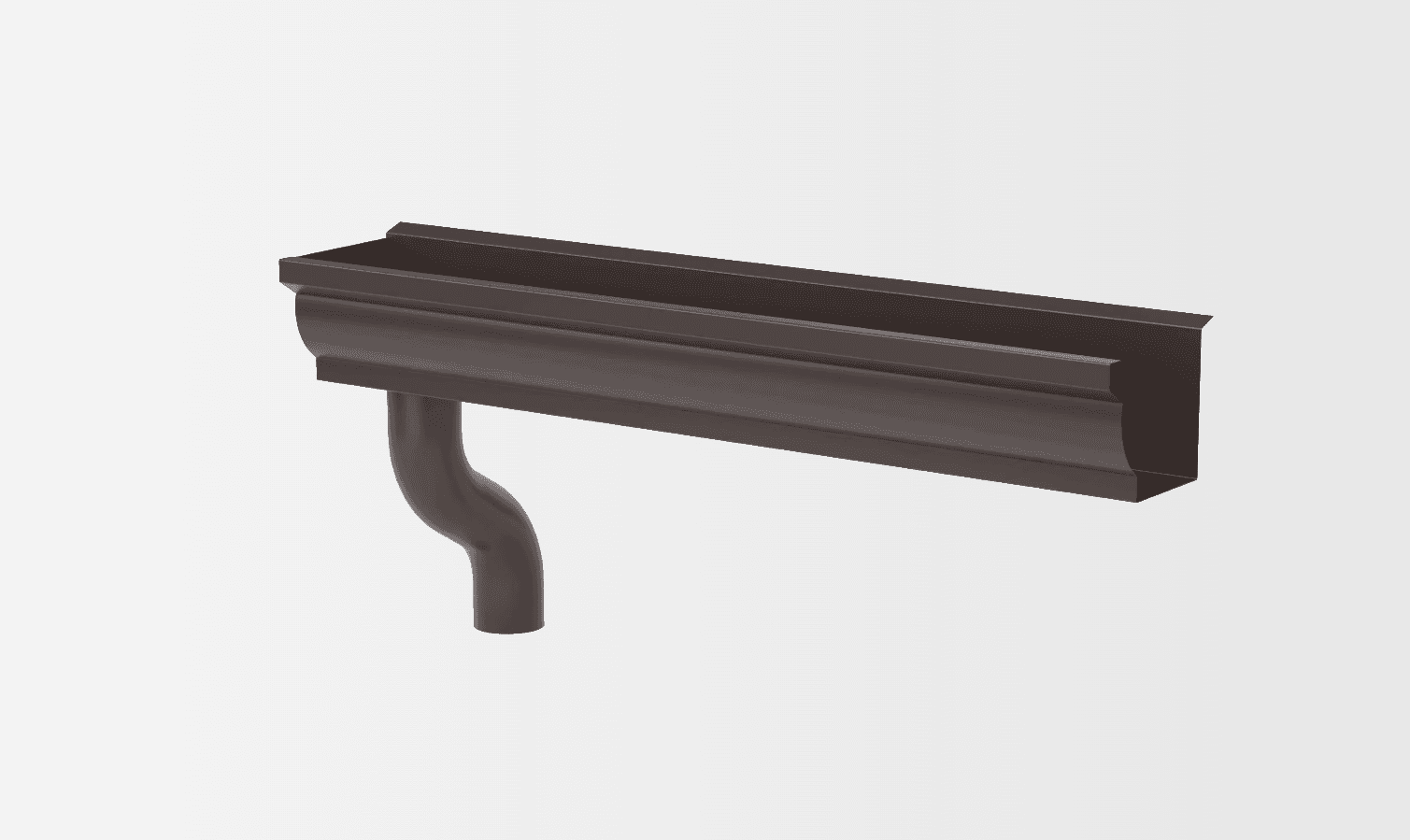
- Quartz-zinc series. Models QZ 101, QZ 102, QZ 103, and QZ 104, in a 500 mm girth, designed for contemporary architecture.
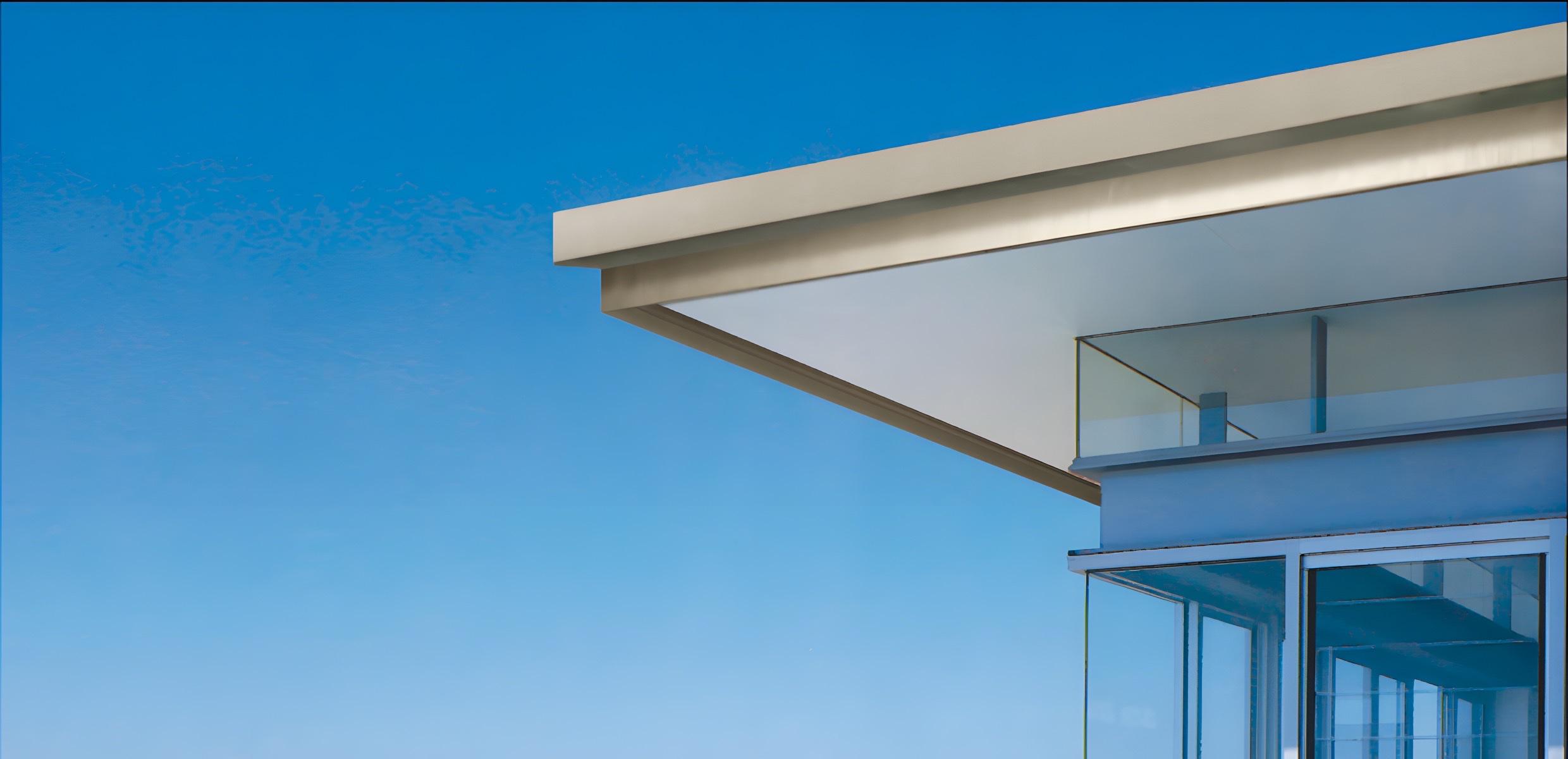
- Fascia panels. Hide and protect the slab edge, improve the eave's appearance, and prevent damp staining on the facade.
- Special profiles and accessories. Round and square downpipes, internal, external, and auxiliary brackets, clips, elbows, end caps, outlets, filters, branch fittings, miters, and gargoyles.
- Custom profile. Our manufacturing system can produce whatever profile the architect or engineer specifies, with no minimum run length.
- Available finishes. RAL 8019, RAL 3009, RAL 9002, and RAL 6002 in pre-coated steel; quartz-zinc, zinc-titanium, and galvanized; and polyester-painted aluminum in any RAL.
- Lead times. 24 hours for standard product and 5 to 10 business days for made-to-measure fabrication.
Section 09
How to Choose Based on Your Project
- Budget comes first: galvanized or pre-coated steel, accepting periodic coating inspection.
- Facade color comes first: polyester-painted aluminum in the project's RAL.
- Renovation or traditional architecture: zinc, for its patina and aesthetic fit with the existing roof.
- Exposed contemporary architecture: quartz-zinc design profiles, with clean lines and strong shadow lines.
- Large-surface roofs: 750 mm-girth profiles with outlets and downpipes sized for the flow rate.
- Marine environments: take extra care with metal combinations and fixings.
FAQ
Frequently asked questions
Which gutter lasts longer, aluminum or zinc?+
Both offer very long service lives. Aluminum doesn't rust and is lighter; zinc stands out for its patina and traditional look, and in quartz-zinc, corrosion resistance runs from 50 to 100 years depending on the environment. The choice usually comes down to aesthetics and budget rather than durability.
Can I fit an aluminum downpipe with a zinc gutter?+
It's best not to mix them. If you do combine them, you need to manage the contact points and the direction water flows to minimize the risk of galvanic corrosion.
What's the difference between quartz-zinc and zinc-titanium?+
Zinc-titanium is the base alloy, made from high-purity zinc with titanium, copper, and aluminum. Quartz-zinc is that same zinc given a factory pre-weathering treatment that gives it the satin grey look from day one and exceptional corrosion resistance.
Can aluminum be lacquered in color?+
Yes. Aluminum can be lacquered in any RAL color, which lets it match the facade or window frames.
Do you manufacture made-to-measure gutters?+
Yes. We manufacture gutters in polyester-painted aluminum, zinc, and galvanized steel adapted to the project, alongside our classic and design series, and even a profile defined by your own engineer.
How long does delivery take?+
Standard product ships within 24 hours, and made-to-measure fabrication takes between 5 and 10 business days, delivered directly on-site.
Share