Key takeaways
6 min read
Key point 1
The gutter collects rainwater from the roof and channels it to the downpipes; a poorly chosen or undersized gutter causes overflow, damp, and facade damage.
Key point 2
By shape, the two classic profiles are half-round and square; design profiles for contemporary facades and industrial buildings add to these.
Key point 3
The material — powder-coated aluminum, zinc-titanium, or galvanized steel — determines the installation's durability, maintenance, and finish.
Key point 4
Sizing depends on roof surface and local rainfall: the more water to drain, the larger the gutter and downpipe section needed.
Key point 5
When the roof has specific lengths, angles, or aesthetics, made-to-measure fabrication avoids forced joints and leak points.
In this article
If you're choosing gutters for a project, you probably want answers to three questions: what type of gutter fits your roof, what material suits the climate and durability you're after, and what size you need for good water drainage. It's not a minor decision: the gutter is the facade's first line of defense against rain, and a poorly chosen or undersized profile leads to overflow, staining, damp, and even structural damage over time. This guide explains what types of gutters exist, what materials they're made from, and how to choose the right one for your project.
Section 02
What a Gutter Is and What It's For
A gutter is the element installed at the roof edge to collect rainwater running off the roof surface and channel it, with a slight slope, toward downpipes that carry it to the drain. Its job is to keep water under control: it stops it cascading down the building's perimeter, protects the facade from splashing and staining, and keeps moisture away from the foundations. Though it goes unnoticed, it's a key part of the roof. A good gutter, properly sized and installed, extends the building's life; a poorly resolved one ends up causing exactly the problems it was meant to prevent.
Section 03
Types of Gutters by Profile
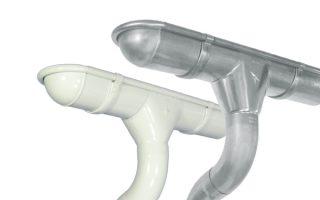
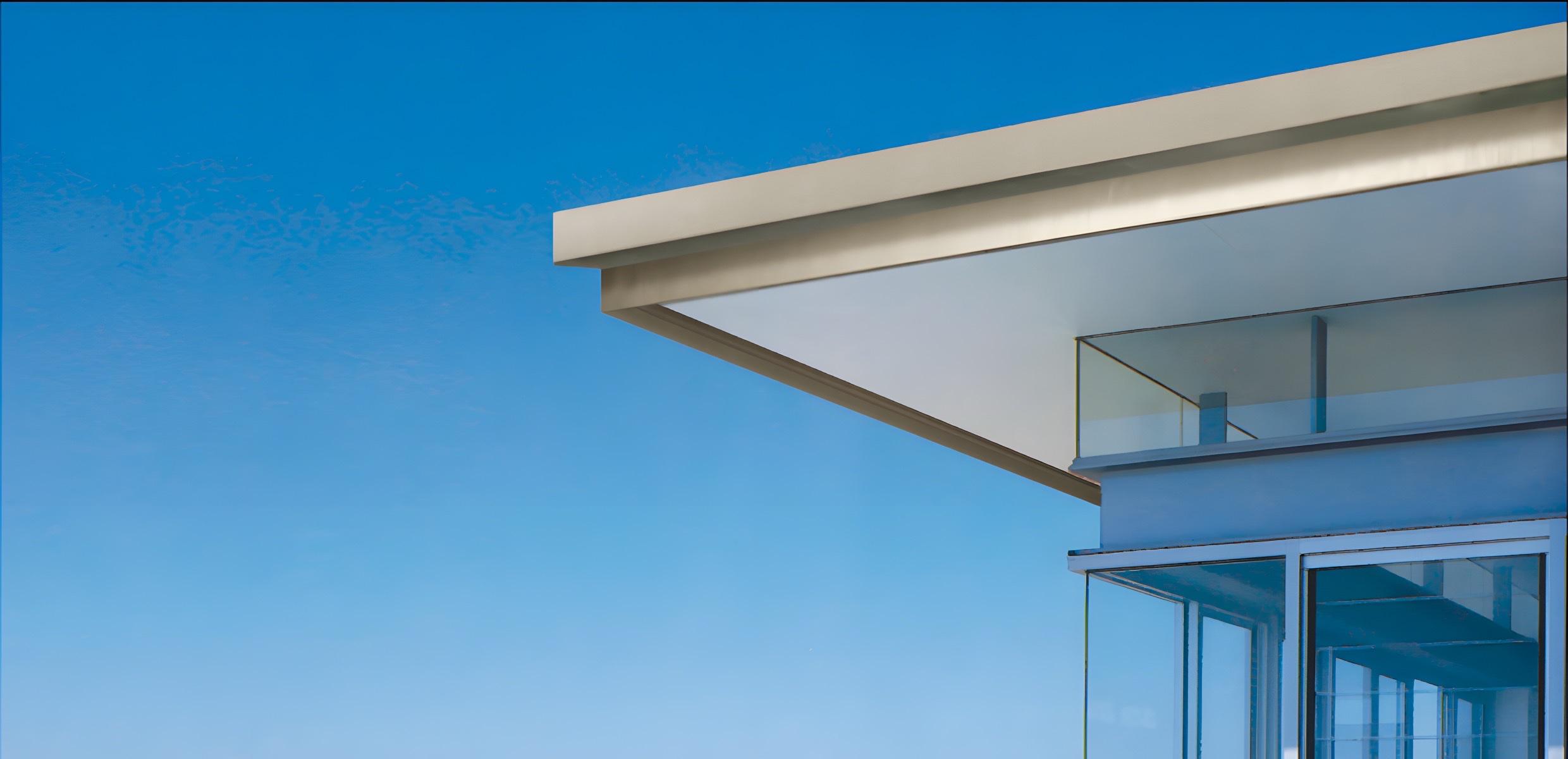
The most practical classification is by cross-section shape. The half-round gutter is the classic profile par excellence: its half-pipe section drains very well, cleans easily, and suits almost any building style, from traditional housing to renovation work. The square (or rectangular) gutter offers a straighter, more contemporary look and, for the same size, usually offers greater drainage capacity, making it common in modern architecture and roofs with demanding flow rates. Alongside these two classic profiles are design profiles, solutions with clean lines meant for contemporary facades and industrial building roofs, where the goal is to integrate rainwater collection without giving up the overall aesthetic.
Section 04
Types of Gutters by Installation
Beyond the profile, it's worth distinguishing how the gutter is positioned relative to the roof. The exterior or hanging gutter is the most common: it's fixed to the eave with brackets or hooks, stays visible, and is easy to install and maintain. The hidden or built-in gutter is integrated into the roof structure, so it's not visible from the street; it offers a cleaner, more minimalist finish, but requires more careful waterproofing and proper sizing, because any fault stays hidden and is caught late. The choice between the two depends on the type of roof, the desired look, and how much maintenance you're willing to take on.
Section 05
Materials Most Commonly Used
Material determines the gutter's durability, maintenance, and appearance. Powder-coated aluminum is one of the most versatile options: it's lightweight, doesn't rust, resists weather and UV rays very well, needs little maintenance, and takes finishes in different RAL colors to blend with the facade. Zinc — in its zinc-titanium and quartz-zinc versions — is a very durable, aesthetically valuable material that develops a characteristic protective patina over time; it's common in renovation, distinctive buildings, and high-quality architecture. Galvanized steel, as well as pre-coated steel, offers a good strength-to-price ratio and works very well for industrial buildings and projects where robustness comes first. Other market alternatives, like PVC, are cheaper and lighter, but tend to lose appearance and performance with prolonged sun exposure. The right choice isn't the most expensive material, but the one that fits the climate, the look, and the service life your project expects.
Section 06
How to Size the Gutter
A nice-looking gutter that doesn't drain well is useless. Sizing depends mostly on two factors: the roof surface draining into that gutter, and the local rainfall intensity, which varies a lot across Spain between the wet north and the interior or southeast. The larger the collection surface and the higher the rainfall, the larger the gutter and downpipe section needed to keep water from overflowing during heavy storms. The gutter's installed slope — which needs a slight fall toward the downpipes — and the number and placement of those downpipes also matter. That's why it's worth calculating the gutter-downpipe system as a whole, rather than relying on a standard size chosen out of habit.
Section 07
How to Choose the Right Gutter
To get it right, it's worth reviewing several criteria in order. First, the type and geometry of the roof: eave length, slopes, and number of roof planes. Second, local rainfall, which determines the flow rate to be drained and, with it, the required section. Third, the material, based on durability, maintenance, and climate (for example, coastal or very humid environments call for materials especially resistant to corrosion). Fourth, aesthetics: the profile and finish should blend with the facade, whether traditional or contemporary. And fifth, the type of building: a home, a renovation, and an industrial building don't have the same flow-rate or finish requirements.
Section 08
When a Made-to-Measure Gutter Makes Sense
On real projects, many roofs don't fit catalog profiles and lengths: long eaves, unusual angles, complex junctions, or specific color and design requirements. In these cases, forcing standard pieces usually turns out worse; it multiplies joints, worsens the finish, and creates weak points where leaks later appear. When the roof has particular features or a specific look is wanted, the sensible choice is to have the gutter made to measure, so the piece adapts to the project instead of the other way around. This is especially useful in renovation, distinctive architecture, and industrial buildings with long collection runs.
Section 09
What the Regulations Say
In Spain, rainwater drainage is regulated under CTE DB-HS 5 (Water Evacuation), which sets criteria for sizing the collection network — gutters and downpipes included — based on roof surface and the site's rainfall zone. The underlying idea is simple: the system must be able to drain the expected rainwater without overflowing. This doesn't mean there's one universal valid gutter — it means the section, slope, and number of downpipes must be calculated for each specific roof. That's why it's worth talking about a sized solution for each project, not a universal measurement.
Section 10
IMS Gutters by Industrias Mas
IMS is Industrias Mas's gutter range, made to measure in powder-coated aluminum, zinc, and galvanized steel. It includes the classic profiles — half-round and square — and a broad family of design profiles (IMS-1, IMS-3 to IMS-7, IMS-751, and the QZ series) suited to both contemporary facades and industrial building roofs. Standard finishes include pre-coated steel in RAL 8019 (brown), RAL 3009 (tile red), RAL 9002 (grey-white), and RAL 6002 (green), plus quartz-zinc, zinc-titanium, and galvanized options. With over 50 years of in-house manufacturing in Tàrrega and ISO 9001 certification, every gutter can be adapted to the project's dimensions and look, with 24-hour delivery for the standard product and 5 to 10 business days for made-to-measure fabrication.
FAQ
Frequently asked questions
What types of gutters exist?+
By profile, the most common are half-round (classic, easy to clean) and square (straight look, higher capacity), plus design profiles for modern facades and industrial buildings. By installation, they can be exterior/hanging or hidden/built-in.
What material is best for a gutter?+
It depends on the project. Powder-coated aluminum is lightweight, corrosion-resistant, and low-maintenance; zinc-titanium stands out for durability and aesthetic value; and galvanized steel offers robustness at a good price, well suited to industrial buildings.
How do I know what gutter size I need?+
The section is calculated based on the roof surface that gutter collects and the local rainfall, together with the installed slope and the number of downpipes. The more water to drain, the larger the gutter and downpipe section.
When does a made-to-measure gutter make sense?+
When the roof has long eaves, unusual angles, complex junctions, or specific color and design requirements. Made-to-measure fabrication avoids forced joints and leak points, and is common in renovation and industrial buildings.
What regulations govern gutters?+
In Spain, CTE DB-HS 5 (Water Evacuation) sets the criteria for sizing rainwater collection — gutters and downpipes — based on roof surface and the site's rainfall zone.