Key takeaways
3 min read
Key point 1
VENTUM®'s geometry converts the wind's dynamic pressure into a low-pressure zone over the flue, improving draft by up to 40% compared to conventional caps.
Key point 2
Every piece is manufactured exactly to measure with a 3 mm technical tolerance per face; there are no standard sizes cut down on-site afterward.
Key point 3
AISI 316L steel contains molybdenum in its composition, making it resistant to the chlorides and organic acids that attack aluminum and AISI 304 steel.
Key point 4
The mechanical VENTUM® model is available in 4 sizes covering flow rates from 77 to 454 l/s for flues with insufficient draft.
In this article
A chimney's draft depends on several factors: flue height, the temperature difference between indoors and outdoors, and the cap that crowns the outlet. This last one is often overlooked, but it's decisive. A poorly designed cap doesn't just fail to help — it can generate active back-pressure that blocks extraction. VENTUM® has been the reference chimney cap for installers and builders in Spain for over 50 years precisely because its geometry is designed to draw air, not just to cover the outlet.
Section 02
Geometry That Draws Air, Not Just Covers It
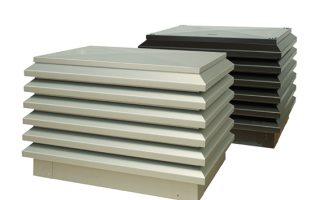
Most chimney caps on the market have a basic function: keeping rain out. VENTUM® goes further. The arrangement of its louvers and the shape of its body are calculated so that wind, passing along the side of the cap, generates a low-pressure zone right above the flue's mouth. That suction acts as a passive extractor that improves draft by up to 40% compared to a flue with no cap or with a conventional one. It consumes no energy, has no moving parts, and works regardless of wind direction.
Section 03
Made to Measure From the Start
At Industrias Mas there are no standard sizes cut down later on-site. Every VENTUM® is manufactured to the exact measurements of the masonry surround provided by the customer, with a technical tolerance of 3 mm per face to guarantee the fit. This means the cap sits perfectly on the surround, with no gaps letting water in and no forces shifting it. For irregular surrounds, faces at different angles, or special heights, Industrias Mas can manufacture pieces to measure from a dimensioned sketch.
Section 04
6063-T5 Aluminum or AISI 316L Stainless Steel
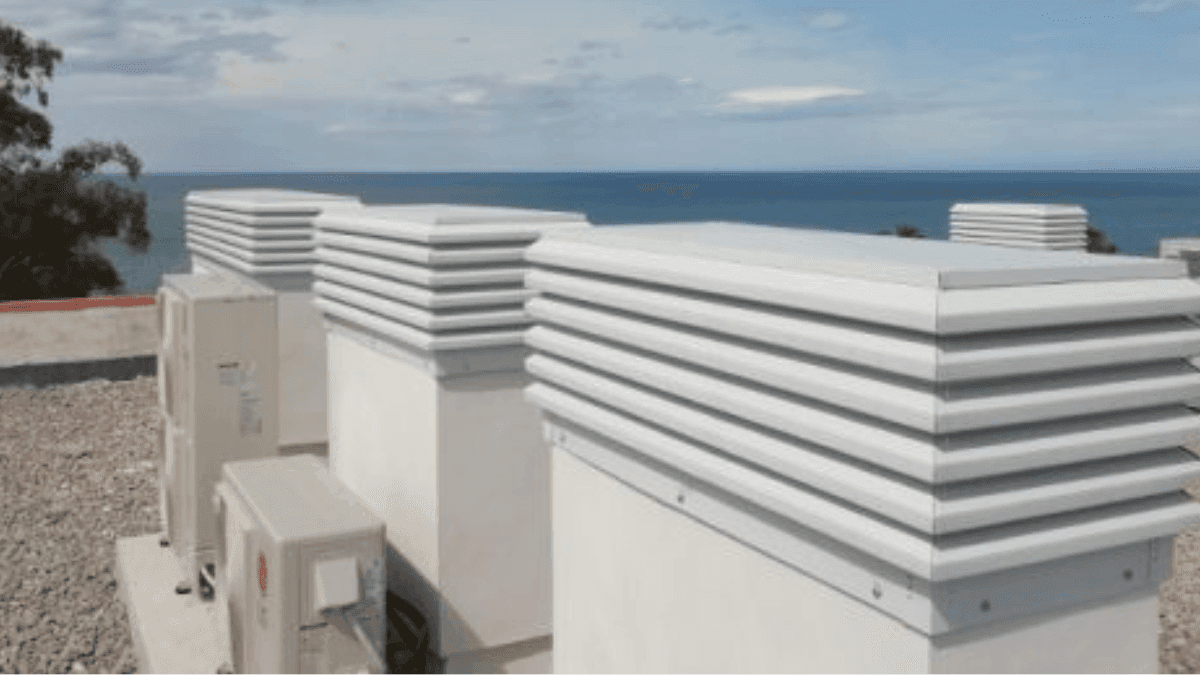
Powder-coated aluminum in 6063-T5 alloy is the standard: lightweight, resistant to atmospheric corrosion, available in any RAL color, with a service life over 20 years with minimal maintenance. For more aggressive environments, such as coastal areas or pellet and biomass fireplaces generating acidic condensates, the option is AISI 316L stainless steel. This steel contains molybdenum in its composition, making it resistant to the chlorides and organic acids that attack both aluminum and AISI 304 steel. Both alloys are manufactured to any size under the same ISO 9001 quality control process.
Section 05
Static or Mechanical, Depending on the Flue
The static VENTUM® is the usual solution for most residential chimneys: no motor, no maintenance, no consumption. The mechanical model incorporates a forced-extraction motor for flues with weak natural draft, whether due to insufficient height, the building's orientation, or a low-wind location. Mechanical models are available in 4 sizes covering flow rates from 77 to 454 l/s. The choice between one and the other isn't about budget but technical need: if natural draft is insufficient, the static version won't make up the deficit.
FAQ
Frequently asked questions
What makes a chimney cap draw air well?+
Geometry. A chimney cap that draws air well converts the wind's dynamic pressure into a low-pressure zone right at the flue's mouth, creating suction that extracts air from inside. This requires a specific louver and baffle design, not just a cover against rain. VENTUM® is designed to generate that suction consistently, regardless of wind direction.
Is aluminum or stainless steel better for a chimney cap?+
It depends on the environment and the type of fuel. For homes with gas or wood heating in inland areas, powder-coated aluminum in 6063-T5 alloy is enough and more economical. For coastal areas with high salinity, or for pellet and biomass fireplaces generating acidic condensates, AISI 316L stainless steel holds up far better. The difference isn't cosmetic: AISI 316L has a molecular structure that resists the chlorides and organic acids that degrade aluminum over time.
Why does the chimney cap need to be exactly made to measure?+
A cap with play leaves gaps that let in water, dust, and side wind that cancels out draft. A cap that's too tight doesn't sit well on the surround and can shift with wind or thermal expansion. Made-to-measure manufacturing isn't an extra — it's the correct way to design the product. Industrias Mas applies a 3 mm technical clearance per face so the cap fits without forcing and with no gaps.