Key takeaways
7 min read
Key point 1
A window sill is the piece that finishes the bottom of a window opening, over the sill ledge, and whose job is to expel rainwater away from the wall.
Key point 2
Its most important element isn't the top face, but the drip edge: the lower ridge that breaks the water and stops it running back onto the facade.
Key point 3
Different materials exist — powder-coated aluminum, natural stone, artificial stone, ceramic, concrete, or PVC — and the choice depends on the project's durability, maintenance, and aesthetics.
Key point 4
A poorly designed window sill results in the typical streaking and vertical stains under windows, and over the medium term, damp and leaks.
Key point 5
When the opening doesn't match a standard size, the sensible choice is to have the piece made to the exact measure of the sill ledge to avoid gaps and on-site adjustments.
In this article
- What a Window Sill Really Is
- Window Sill, Sill Ledge, or Cill: What's the Difference
- What a Window Sill Is For
- The Drip Edge: The Piece That Really Does the Work
- Types of Window Sills
- Materials Most Commonly Used
- How to Choose the Right Window Sill
- When to Order a Made-to-Measure Window Sill
- What the Regulations Say
- ALU-DROP® Window Sills by Industrias Mas
- Frequently asked questions
If you've made it this far, you probably have one of these questions: what exactly is a window sill, what's the difference from a windowsill ledge, what material suits your project, or why those dark stains appear under windows over time. It's a small piece, but its role matters more than it seems: a poorly chosen or badly installed window sill lets rainwater run down the facade and, over the years, ends up causing dirt, damp, and even leaks indoors. This guide explains what a window sill is, what types exist, what materials it's made from, and what function it serves, so you get it right for your project.
Section 02
What a Window Sill Really Is
A window sill is the element installed at the bottom of a window opening, on its exterior face, resting on the sill ledge or parapet. Its job is to collect rainwater running down the window and the wall and channel it outward, away from the facade. It's not a decorative piece: it's a technical protective finish. That's why it's always fitted with a slight outward slope and an overhang beyond the facade plane, so water doesn't pool or run back onto the wall face. Though it goes unnoticed, it's one of the points that most affects a facade's durability and appearance over time.
Section 03
Window Sill, Sill Ledge, or Cill: What's the Difference
In construction language these terms are often mixed up, and it's worth clarifying the nuance. The sill ledge is the bottom of the window opening, the 'step' the frame rests on. The window sill is the finishing piece placed on that ledge to expel water. In some areas it's also called a drip sill or, simply, an aluminum sill when the finishing piece itself covers the whole base of the opening. Commercially, all three terms are used to look for the same type of product, but 'window sill' is the more technical term and the one that best fits specification, construction, and made-to-measure fabrication contexts.
Section 04
What a Window Sill Is For
The window sill's function comes down to one idea: managing water at one of the facade's most exposed points. It does several jobs at once. First, it drains rainwater falling on the window and throws it clear of the wall. Second, it prevents the vertical staining and streaking that appears under windows when water runs down the facade carrying dirt. Third, it protects the joint between the window frame and the wall, a common weak point for moisture ingress. And fourth, it contributes to the overall look, because a facade without streaking stays clean much longer. Put another way: a good window sill doesn't just protect — it also helps the building age well.
Section 05
The Drip Edge: The Piece That Really Does the Work
Here's the detail that makes the difference. The drip edge — also called a drip profile — is the ridge running along the lower edge of the sill's overhang. Its job is to break the water's surface tension: instead of sliding under the piece and returning to the wall by capillary action, the water reaches the drip edge, 'breaks off,' and falls as a drop into the open air. Without a drip edge, much of the water ends up back on the facade, which is exactly what you wanted to avoid. That's why a window sill without a properly designed drip edge does a poor job, however good the material. It's the difference between a clean facade and one covered in stains under every window.
Section 06
Types of Window Sills
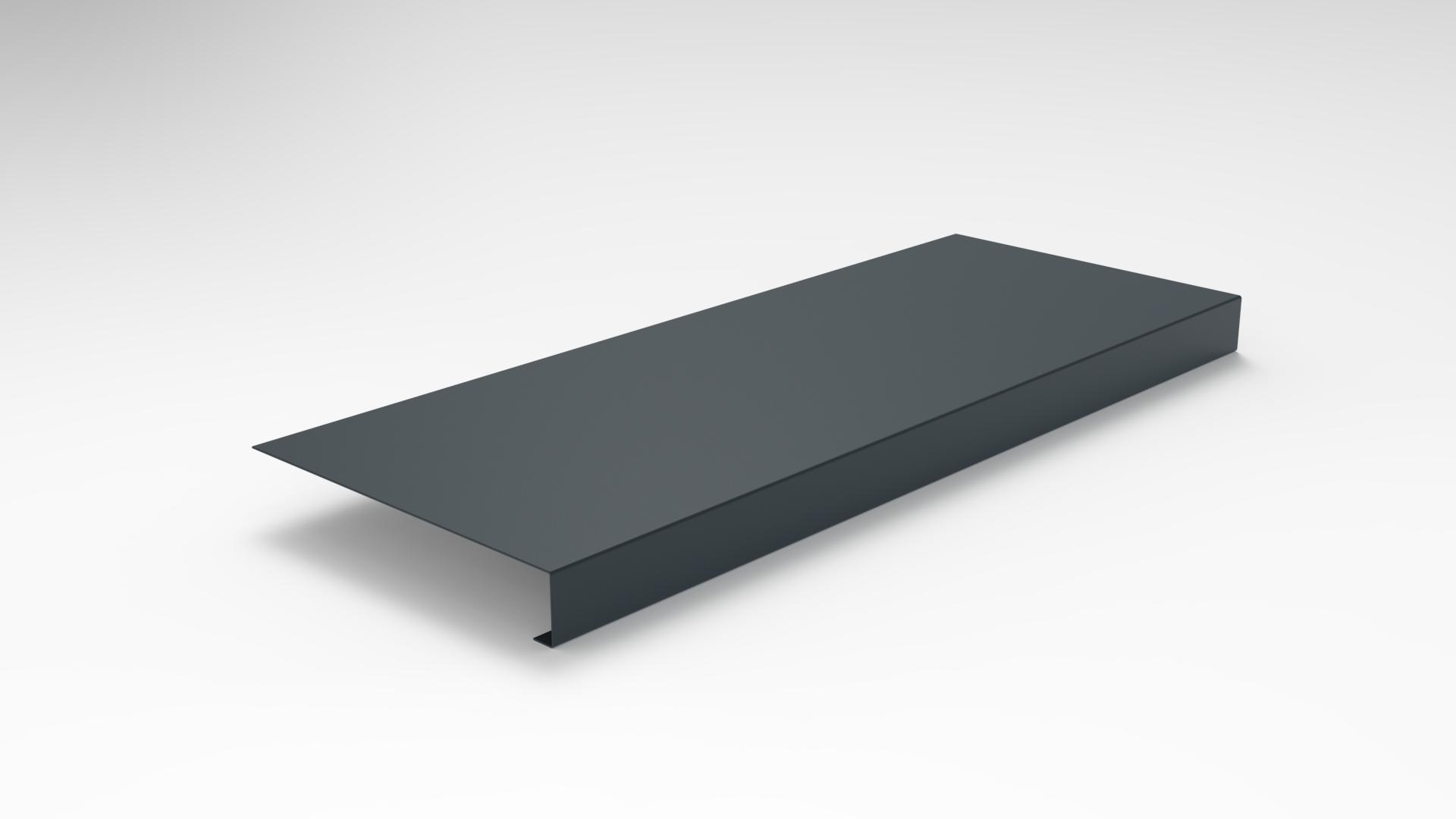
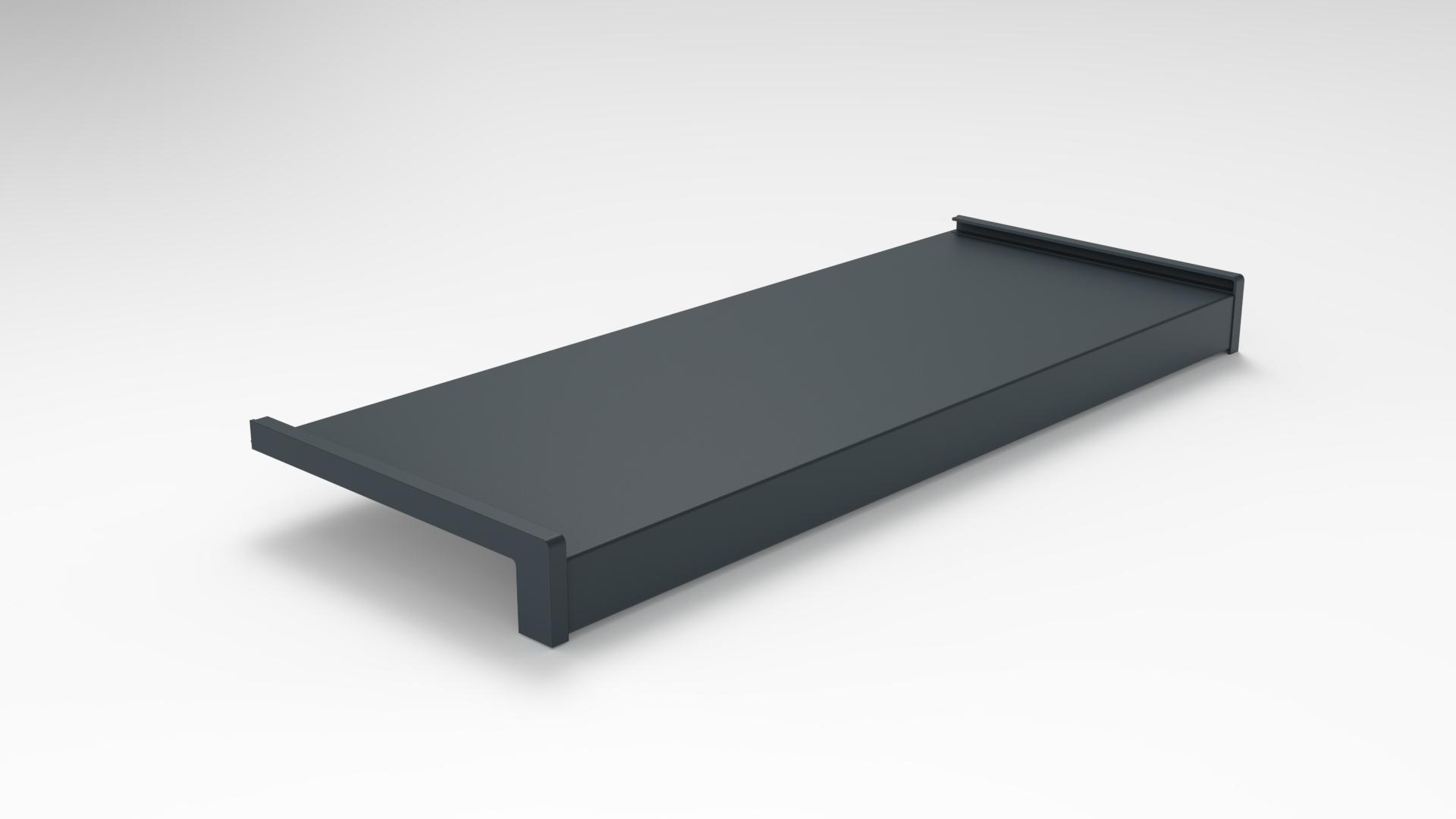
The most useful way to classify them is by design and how they meet the window. The standard model is the window sill without a rear upstand: it redirects rainwater away from the wall and handles most situations in conventional construction. The second is the window sill with a rear upstand, which adds a small rear ridge — around 10 mm — that improves the seal where it meets the window and is especially recommended for facades with monolayer render or SATE external insulation systems, where the finish needs to integrate with the insulation. They can also be distinguished by how they're made: standard catalog pieces or pieces made to measure according to the exact depth of the sill ledge, which best resolve real-world openings.
Section 07
Materials Most Commonly Used
Material determines durability, maintenance, and finish. Powder-coated aluminum is one of the most widely used options today: it's lightweight, doesn't rust, resists weather and UV rays very well, takes any color from the RAL chart, and allows the piece to be made to measure with a perfectly defined drip edge. Natural stone (granite, marble) brings solidity and a traditional look, but it's heavy, more expensive, and, depending on the type, can stain or need treatment. Artificial stone or composites offer a middle ground in cost and uniformity. Ceramic and porcelain stoneware give a good aesthetic result, though they're more fragile against impacts. Precast concrete is economical and robust, but coarser in finish. And PVC is cheap and lightweight, though it tends to lose its appearance over time from sun exposure. The right choice isn't the most expensive material, but the one that fits the exposure, expected maintenance, and the project's aesthetics.
Section 08
How to Choose the Right Window Sill
To get it right, it's worth reviewing several criteria in order. First, the actual opening dimensions: the window's length and the finished sill ledge depth, because the window sill needs to project far enough that the drip edge sits clear of the wall. Second, the facade type: a facade with monolayer render or SATE calls for solutions with a rear upstand and support for the coating, while a conventional enclosure works with the standard profile. Third, the material, based on desired durability and maintenance. Fourth, the finish and color, so the piece blends with the window frames and the rest of the building. And fifth, the end caps, a point often overlooked and one where water can also get in if left open.
Section 09
When to Order a Made-to-Measure Window Sill
On real projects, many openings don't match catalog sizes: sill ledges with unusual depths, long windows, special angles, or requirements for a specific RAL color. When this happens, adapting a standard piece usually turns out worse; it forces cutting, joining, or improvising, worsens the finish, and leaves weak points where leaks later appear. If the opening doesn't match a standard size, the sensible choice is to have the window sill made to the exact measure of the sill ledge and window length, so the piece adapts to the project instead of the other way around.
Section 10
What the Regulations Say
In Spain, the technical reference for this type of finish is CTE DB-HS 1 (Protection Against Moisture), which regulates how the facade behaves against water. Among other things, the document addresses where the facade meets the window frame and sets criteria such as fitting the window sill with an outward slope, with a drip edge on the underside of the overhang and sufficiently clear of the wall face, plus sealing the joint between the frame and the wall. This doesn't mean there's a single valid window sill for everything — it means the finish must be designed correctly to do its job on each specific facade.
Section 11
ALU-DROP® Window Sills by Industrias Mas
ALU-DROP® is Industrias Mas's range of window sills and cills, made from powder-coated aluminum with 25 microns of polyester lacquer resistant to corrosion and UV rays, and available in the full RAL chart (with standard finishes in anthracite grey RAL 7016, natural RAL 9006, black RAL 9005, white RAL 9003, and ash grey RAL 7022). Each piece is made to measure according to the sill ledge depth and window length, in a model without an upstand or with a rear upstand for facades with monolayer render or SATE. Its ALU-DROP® drip profile keeps water away from the wall to eliminate stains and leaks, and it's completed with the ALU-DROP® end cap, a UV-resistant thermoplastic piece that snaps the ends shut with no screws or tools, for a clean, complete finish. All manufactured in Spain since 1968 under ISO 9001 certification.
FAQ
Frequently asked questions
What is a window sill?+
It's the piece that finishes the bottom exterior of a window opening, over the sill ledge, and whose job is to collect rainwater and expel it away from the wall to prevent staining, damp, and leaks in the facade.
What's the difference between a window sill and a sill ledge?+
The sill ledge is the base of the window opening that the frame rests on. The window sill is the protective finish placed over that ledge to expel water. In commercial usage they're sometimes used as synonyms.
What is a window sill's drip edge for?+
The drip edge is the ridge on the lower edge that breaks the water's surface tension and makes it fall as a drop, instead of running back to the wall. Without a drip edge, water returns to the facade and the typical streaking appears.
What material is best for a window sill?+
It depends on the project. Powder-coated aluminum is a very common choice for its light weight, corrosion and UV resistance, low maintenance, and the option to have it made to measure in any RAL color. Stone, ceramic, or concrete are chosen for aesthetic or cost reasons.
When do I need a made-to-measure window sill?+
When the sill ledge has an unusual depth, the window is long, or a specific RAL color is required. Making the piece to measure avoids gaps, joints, and improvised on-site adjustments.
What regulations govern window sills?+
In Spain, CTE DB-HS 1 (Protection Against Moisture) sets the criteria for where the facade meets the window frame, including the outward slope, the drip edge, and clearance from the wall.