Key takeaways
5 min read
Key point 1
The ALU-CLICK® wall cap is manufactured to measure for wall widths from 70 mm to 600 mm, in pieces with a standard 3-meter length, with a 25 mm lateral overhang and a 45 mm drop per side.
Key point 2
Installation requires no silicone or sealants thanks to the sealed bituminous joint system built into the ALU-CLICK® base plate.
Key point 3
Leave a 4 mm gap in summer and 8 mm in winter between pieces to allow the aluminum's thermal expansion.
Key point 4
Four standard RAL colors — anthracite (RAL 7016), natural (RAL 9006), white (RAL 9003), and dark grey (RAL 7022) — with the option of the full RAL chart on request.
Key point 5
Quotes are prepared within 24 business hours; made-to-measure orders are manufactured in 5–10 business days and delivered on-site across Spain.
In this article
- Where Is the ALU-CLICK® Wall Cap Used?
- 1. Measure the Wall Width Correctly
- 2. Calculate How Many Profiles You Need
- 3. Choose the Right RAL Color
- 4. Identify the Necessary Accessories
- 5. Assess Local Climate Conditions
- 6. Check Manufacturing and Delivery Lead Times
- ALU-CLICK® System Installation Steps
- Quick Summary: From Wall to Order in Five Data Points
- Frequently asked questions
Choosing the wall cap correctly shapes the facade's durability and how fast the project moves. Industrias Mas's ALU-CLICK® wall caps are made-to-measure powder-coated aluminum profiles installed on top of the wall with no silicone or visible fixings. This guide summarizes six practical steps for choosing the right model, calculating quantities, and avoiding measurement errors that delay delivery.
Section 02
Where Is the ALU-CLICK® Wall Cap Used?
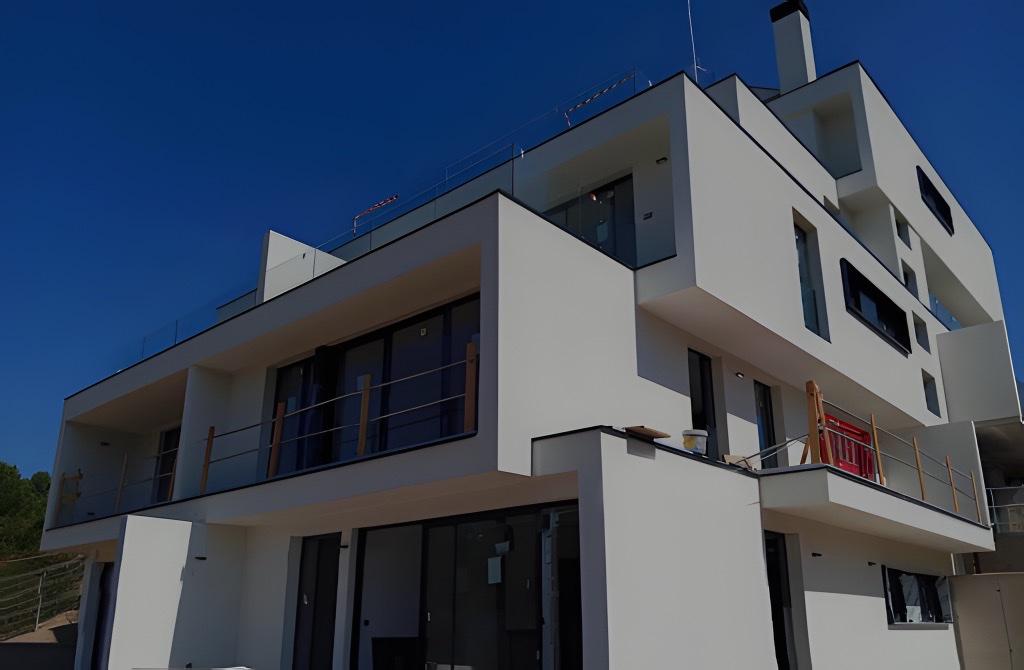
The system covers most rain-exposed coping applications. In multi-family buildings and apartment blocks it's installed on flat or accessible roof parapets. In single-family homes it protects boundary walls, terrace parapets, and chimney finishes. In industrial buildings and logistics centers it's used on roofs and perimeter walls of large linear developments. In office and commercial projects it delivers a clean finish that integrates with ventilated facades and SATE insulation.
Section 03
1. Measure the Wall Width Correctly
The width to order is that of the finished wall, including insulation, cladding, and any protruding layer. The ALU-CLICK® wall cap is manufactured from 70 mm to 600 mm wide, with made-to-measure increments. The profile always adds 25 mm of lateral overhang on each side and a 45 mm vertical drop per side, which is the dimension that keeps water away from the wall face. If the wall is irregular or has sections of different widths, sections with different measurements can be manufactured within the same order.
Section 04
2. Calculate How Many Profiles You Need
Each piece has a standard length of 3 meters. To estimate the order, divide the wall's total length by 3 and round up. Add an extra 5–10% as a margin for cuts and corner adjustments, and count accessories separately: one miter piece per exterior or interior corner, one end cap per open end, and one T-piece per perpendicular wall junction. On projects with many corners, it's worth drawing a simple perimeter plan before requesting a quote.
Section 05
3. Choose the Right RAL Color
Industrias Mas keeps four stock colors that cover most facades: anthracite grey (RAL 7016) is the most requested in contemporary architecture and blends well with dark window frames; natural (RAL 9006) mimics unpainted aluminum and is common on industrial roofs; white (RAL 9003) suits white facades or light SATE insulation; dark grey (RAL 7022) is a warmer alternative to RAL 7016. Any other RAL color is manufactured on request with no significant delay penalty. The aluminum is powder-coated with 25 microns of polyester lacquer on both sides, ensuring UV and corrosion resistance for decades.
Section 06
4. Identify the Necessary Accessories
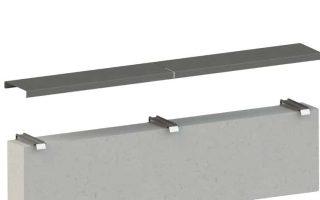
The ALU-CLICK® system consists of five pieces: the 3-meter powder-coated aluminum profile, the grooved base plate with integrated bituminous seal that screws to the wall, exterior and interior 90° miter pieces to handle corners, end caps for the wall's open ends, and special T-pieces for perpendicular wall junctions. Ordering the complete kit upfront avoids on-site waits for one-off replacements.
Section 07
5. Assess Local Climate Conditions
Powder-coated aluminum performs well in any climate across the peninsula, but there are areas where it's worth reinforcing the decision. In coastal areas with high salinity, the 25-micron coating on both sides is what prevents corrosion, while standard galvanized or painted sheet-metal coping degrades quickly. In areas with frequent frost, the important thing is to respect the expansion gap between pieces (4 mm in summer, 8 mm in winter) so the aluminum can contract without stress. In areas with high solar radiation, the polyester powder coating resists UV aging with no noticeable color loss.
Section 08
6. Check Manufacturing and Delivery Lead Times
The custom quote is prepared within 24 business hours of sending measurements. Standard orders in stock colors ship within 24-48 business hours; made-to-measure orders with special finishes take 5 to 10 business days. Delivery is made directly on-site across Spain, which simplifies logistics for the site manager and eliminates intermediate handling.
Section 09
ALU-CLICK® System Installation Steps
Installation is completed in four steps: 1) Align the ALU-CLICK® base plates on top of the wall, following the facade line. 2) Fix each plate to the wall with the screws suited to the support (concrete, brick masonry, etc.). 3) Fit the aluminum profile by rotating it from outside to inside until you hear the 'click' confirming it's correctly seated on the plate. 4) Leave a 4 mm gap in summer or 8 mm in winter between consecutive pieces for the aluminum's thermal expansion. You can see the full process in the ALU-CLICK® system installation video on YouTube.
Section 10
Quick Summary: From Wall to Order in Five Data Points
Before requesting a quote, have five data points ready: finished wall width (between 70 mm and 600 mm), total length to cover (in linear meters), number of corners and T-junctions, preferred RAL color, and desired lead time. With this information, Industrias Mas's sales team prepares a fixed quote within 24 business hours.
FAQ
Frequently asked questions
How do you measure an ALU-CLICK® wall cap?+
You need to measure the exact width of the finished wall (not the raw wall before insulation) and the total length to cover. The wall cap is manufactured with the wall's width plus a 25 mm lateral overhang on each side and a 45 mm vertical drop that keeps water away from the wall face. Industrias Mas manufactures from 70 mm to 600 mm wide, made to measure.
How many wall cap profiles do I need for my project?+
Each ALU-CLICK® profile has a standard length of 3 meters. Divide the wall's total length by 3 to get the number of profiles, add 5–10% for cuts and corners, and add the necessary accessories (90° miter pieces for corners, end caps for the ends, and T-pieces for wall junctions).
What RAL colors are available?+
Industrias Mas offers four standard colors in stock: anthracite grey (RAL 7016), natural (RAL 9006), white (RAL 9003), and dark grey (RAL 7022). On request it's manufactured in any RAL color, with a slight lead-time adjustment.
How long does it take to receive the wall cap?+
The quote is prepared within 24 business hours of the request. Standard orders in stock colors ship within 24-48 business hours; made-to-measure orders or those with special finishes are manufactured in 5–10 business days. Delivery is made directly on-site across Spain.
What accessories do I need besides the profile?+
The ALU-CLICK® system consists of the powder-coated aluminum profile, the ALU-CLICK® base plate with bituminous seal, 90° exterior and interior miter pieces for corners, end caps to finish the ends, and special T-pieces for wall junctions. Industrias Mas supplies the complete kit according to the project's measurements.
Do I need to leave a gap for aluminum expansion?+
Yes. Leave a 4 mm gap in summer and 8 mm in winter between pieces. Respecting this gap is essential so the aluminum can expand and contract with temperature changes without deforming the profile or compromising the sealed joint.